

Interview with members of the “Socialist Fighters Alliance” in Afghanistan about the economic and social situation in the country, five years after the withdrawal of the US army.
- Five years after the withdrawal of the US army from Afghanistan, what is the mood in Afghan society?
After the withdrawal of the occupying American and NATO forces from Afghanistan in August 2021, the rule of the Taliban and the imposition of intolerable medieval laws in the country have left the situation of the people—men, women, elderly, youth, and children—deeply concerning. The country is being driven toward ruin socially, economically, culturally, scientifically, and in terms of healthcare. The greatest concerns stem from poverty, unemployment, oppression of women, and the suppression of political opponents. The first act of the Taliban upon assuming power was to expel women from government offices and private institutions, and to close the gates of schools above the sixth grade for girls, as well as universities for women.
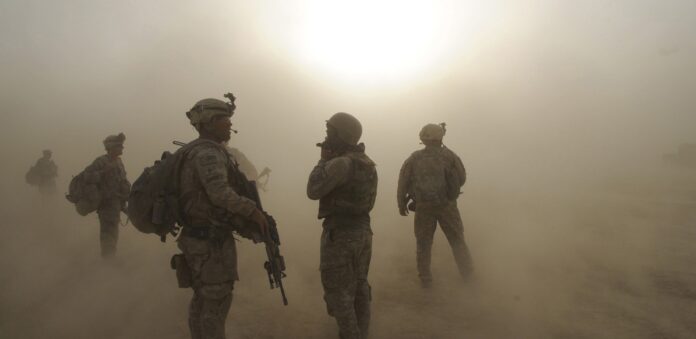
The pressure of economic recession weighs primarily on labourers, workers, and the lower strata of society, which has given rise to profound public dissatisfaction with the Taliban regime. The majority of young people, especially women and girls, hold no hope for any improvement in the economic and social situation under Taliban rule. Not only are the Afghan people disillusioned with the Taliban, but informed individuals also hold “the international community”—namely the United States and its allies—primarily responsible for this ongoing catastrophe in Afghanistan. Through their duplicitous negotiations with the Taliban in Doha in 2020, they paved the way for the transfer of power to the Taliban. The United States and its allies, faced with a humiliating defeat in the twenty-year war in Afghanistan, sought to rid themselves of the heavy costs of that war and, following the withdrawal of their forces, redirected their attention toward confronting Russia through Ukraine. Although the U.S. and NATO ostensibly pulled their military forces out of Afghanistan, this by no means signifies the absence of their intelligence presence or their extensive interference in Afghanistan and the region. Afghanistan’s airspace is still controlled by the United States, and the U.S. continues, under the pretext of humanitarian aid, to deliver over forty million dollars in cash weekly to the Taliban.
The Afghan people know that for the United States and its European allies, democratic values, human rights, and women’s rights carry no weight when their economic and political interests are at stake. The United States, under the slogans of the “war on terror” and the restoration of democracy and women’s rights, overthrew the Taliban regime in 2001. Yet after twenty years of war, the killing of hundreds of thousands of Afghans, the destruction of the country’s infrastructure, and the deployment of the most modern weaponry—including the mother of all bombs—the very same United States handed power back to the misogynistic and terrorist Taliban in 2021.
The Afghan people have just recently witnessed the hypocritical policy of Western countries regarding the defence of democracy and human rights. Despite widespread protests by Afghan women both inside and outside the country, the European Union, on June 23, 2026, invited a five-member Taliban delegation to Brussels and rolled out a red carpet for them in order to negotiate the forced deportation of Afghan refugees from EU member states. Germany and Norway are handing over Afghan embassies and consulates to the misogynistic Taliban regime, thereby legitimizing this terrorist group, the majority of whose leaders are on the United Nations blacklist and subject to international criminal prosecution.
- What is the situation in terms of living standards, workers’ and democratic rights?
Numerous international reports clearly indicate that Afghanistan under Taliban rule is facing a full-blown humanitarian catastrophe. Living standards have plummeted to the lowest possible level, workers -especially women- are grappling with unemployment and job insecurity, and not the slightest trace of democratic rights or respect for human dignity can be found. Worsening poverty, hunger, and systematic suppression, particularly against women, paint a very bleak future for the Afghan people.
Since the Taliban’s return to power in August 2021, the country’s economy has contracted by over 20 percent and remains extremely fragile. The Taliban possess no knowledge, capacity, or strategy to lift the economy out of crisis. Over their five years in power, they have proven that, beyond issuing over 150 anti-woman decrees, restricting freedoms, and enforcing Islamic sharia, they have done nothing effective to improve the people’s economic and social condition.
The Taliban have banned half of Afghanistan’s population -women- from working in private institutions and government offices, even though, due to four decades of war, the majority of families have lost their adult male members, leaving women as the sole breadwinners for their households and children. On the other hand, because of administrative corruption and ethnic and political infighting within the Taliban government, workers and young people -despite having the necessary education and skills- have no chance of finding employment or being hired. Overall, the unemployment rate is estimated at over 75%. The UN estimates that in 2026, nearly 4 million children and more than 1 million pregnant or breastfeeding women will suffer from acute malnutrition. Over the past four years, more than 400 health facilities have closed, and access to food and medical care has been lost for hundreds of thousands of people.
Families, driven by poverty and hunger, are forced to sell their children or their own organs, or resort to suicide. Recently, the Taliban’s supreme leader issued a decree legitimizing the marriage of underage girls. According to credible reports, the rates of child marriage and forced marriage have risen sharply, leading to increased domestic violence and crime.
The independent judicial system has been dismantled, and courts now operate under the direct influence of the Taliban. Public and horrifying punishments—such as executions and floggings in public squares are carried out for offenses like murder, adultery, and theft. Corporal punishment of women in bazaars for “tight clothing” or “loud laughter” has become routine.
In its 2026 report, Freedom House gave Afghanistan a freedom score of 8 out of 100, ranking it among the “least free” countries in the world. The organization stated that the Taliban have suspended all political and civil rights, dissolved representative institutions, and banned any criticism of the regime.
- Recently, there was news about dozens of women being arrested for «dress violations». As you have already described, women’s rights in the country are under a constant attack. Are there elements of resistance in Afghan society? What do you expect or hope for in the coming years?
Your question refers to the recent tragic events in Herat Province, where over 20 women were arrested for failing to comply with the Taliban’s dress-code orders. This incident prompted the families of the detained women, along with other citizens, to take to the streets in protest, demanding the release of those held. These protests, which began in early June 2026, were not only a firm response to the Taliban’s arbitrary arrests of women but also, in fact, a magnificent and courageous uprising of the people against the Taliban’s prohibitions denying women access to the most basic human rights – including education, work, peaceful assembly, civil and social participation, access to healthcare, and the deprivation of all other citizenship rights.
This uprising of women and men was brutally suppressed by Taliban forces. One woman and a 12‑year‑old child were killed by Taliban gunfire, and more than 40 others were wounded. The Taliban warned both public and private hospitals not to admit or treat the injured. In addition to the deaths and injuries among protesters, the Taliban beat and detained over 50 men and women on charges of participating in the demonstrations, transferring them to unknown locations. To date, no information is available about the fate of the majority of them.
The current situation of women in Afghanistan cannot be regarded merely as a cultural or religious regression; rather, it is the product of the intersection of the Taliban’s extremist Islam and the archaic patriarchal structures of society, formed within a particular historical and geopolitical context. In the final analysis, the Taliban’s policies serve as a tool for imposing strict control over half the population and for reproducing systems of class and patriarchal domination.
Through its policies, the Taliban regime is institutionalising a form of “gender apartheid,” in which women are systematically excluded from public spheres, education, employment, and even access to basic health and medical care. These measures not only violate fundamental human rights but are designed to destroy women’s agency and reduce them to passive, dependent beings. Importantly, the roots of this repression lie in the deep contradictions between Afghanistan’s tribal and rural society and modernity – contradictions that have been exploited for decades by outside powers for their own interests.
The Taliban imagined that by brutally suppressing women’s demonstrations in Kabul and other cities from 2022 to 2024, women would no longer dare to protest openly. But the people of Herat proved otherwise: not only women, but for the first time in the last five years of Taliban rule, men also took to the streets alongside women in support of women’s rights.
Resistance against the harassment and persecution of women has not been confined to one city. In various regions and cities, there are civil movements and women’s protests against despotism, gender discrimination, and the Taliban’s medieval restrictions on women – each time suppressed by the Taliban in the harshest manner.
The “Spontaneous Movement of Afghan Women” (SMAW), which emerged after the Taliban’s takeover and was formed by women with leftist, democratic, feminist, and secular tendencies from various sectors -including teachers, school and university students, and mothers of students- took to the streets under the slogan “Bread, Work, Freedom” to challenge the Taliban’s rule and break the taboo of fear surrounding them. Today, despite suffering heavy blows from the Taliban -including the killing of dozens of members and the imprisonment of hundreds of activists- the SMAW remains at the forefront of the anti‑Taliban struggle both inside and outside Afghanistan.
Therefore, the workers, youth, and women of Afghanistan -who are the primary victims of war and Taliban rule- can no longer afford to be trapped in the deceptive web of nationalist forces, Islamists, and their imperialist backers. Through experience and the heavy price they have paid in material and spiritual terms, they have come to understand that no foreign or imperialist force, nor their domestic hirelings, wishes or is able to grant well‑being and freedom to another nation. Rather, the people must determine their own destiny independently and through self‑reliance.
The Afghan people and women have no trust whatsoever in the jihadi opposition and war criminals led by Ahmad Massoud, nor in the corrupt remnants of Ashraf Ghani’s puppet regime, most of whom reside abroad. The people regard them, just like the United States and NATO, as agents of their misery and the cause of the Taliban’s return to power. The political Islamist groups and ostensibly democratic, Western‑aligned political elements who held power before the Taliban’s takeover were all mired in financial corruption and betrayal.
The only class‑based support and hope for liberation of the country’s working people from the yoke of the Taliban and their foreign masters lies with the revolutionary left forces and freedom‑seeking groups. These revolutionary left forces, through their enlightening activities, the building of mass bases, and the mobilisation of support from the women’s movement and the deprived strata of society, can fight for the establishment of an independent, democratic, and secular state. They can emerge as the sole progressive alternative acceptable to the majority of the Afghan people in opposition to the misogynistic, anti‑freedom, and anti‑civilisational rule of the Taliban.