


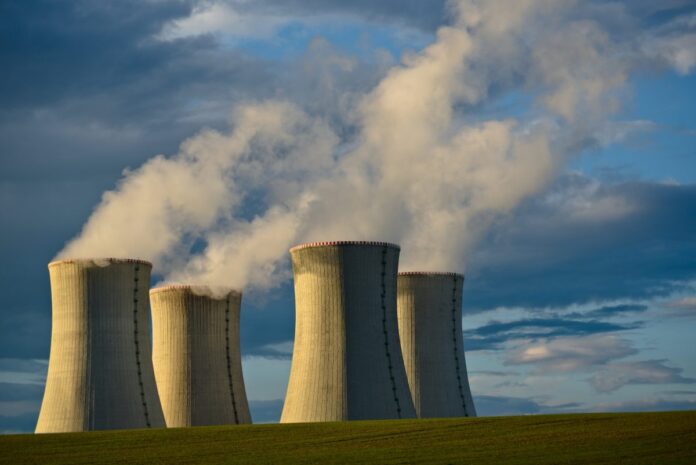
The discussion around nuclear energy is revived across Europe. European Commission President Ursula von der Leyen stated during the nuclear summit that was held in France last March that “… Europe has made a strategic mistake by moving away from a reliable, affordable, and low-emission energy source”. She also announced that in the near future she would secure 200 million euros for investments in nuclear energy.
The situation is similar in other parts of the world, where, amid a global energy crisis, countries are returning to—or extending—the most dangerous “solutions” to the problem. South Korea plans to increase nuclear power production by restarting a nuclear reactor that had been shut down since 2023. Japan is reopening the Kashiwazaki-Kariwa nuclear power plant, considered the largest in the world, which had been shut down following the 2011 Fukushima nuclear disaster. France is moving swiftly to implement the expansion of its nuclear power plants, a decision made several years ago. The program will cost 70 billion euros and the French government recently announced that this expansion will contribute significantly to Europe’s total energy production in the coming years.
The Battle Over Fossil Fuels
All of the above plans are part of the broader effort to address the “state of emergency” that has arisen following the U.S. and Israeli attack on Iran. A “state of emergency” from which European energy multinationals are profiting; according to a Greenpeace statement, their profits rose by 81.4 million euros per day after the war began, thanks to rising fuel prices. The BBC reports that BP saw its profits rise by $3.2 billion in the first quarter of 2026, while Shell saw a profit increase of $6.92 billion during the same period!
A few years ago, the war in Ukraine prompted Western governments and multinationals to seek alternatives to Russian natural gas. To this day, this effort remains the driving force behind the ambitious plans to build new terminals and pipelines that will bring even more American liquefied natural gas (LNG) to Europe and the Balkans via Greece. Fossil fuels remain a source of enormous profits for major multinationals not only in Europe but also in the U.S. Today, however, especially following the war in Iran and the inability to transport oil and natural gas through the Strait of Hormuz, they are insufficient to ensure energy security, leading a number of countries to reconsider nuclear power.
In every such “emergency” that the system itself creates, it seeks out and finds solutions that are disastrous for the environment and people’s lives; and there are always eager multinationals ready to implement those plans, willing to take on the relatively small risk in exchange for enormous profits.
Small Modular Reactors
The new “trend” in nuclear energy is the so-called “small modular reactors” (SMRs). Proponents of their expansion are trying to present them as a new, safer, and more economical method compared to older nuclear reactors, one that could “revolutionize” the energy sector. The reality is quite far from these claims.
“Small modular nuclear reactors” are not based on any new technology, but operate just like traditional reactors. The difference is that they are smaller in size, which theoretically makes it possible to manufacture them in factories and then transport them to the power plant where they will be installed. This process reduces the cost and construction time of the reactors. However, for the time being, there are very few examples of plants operating with small modular reactors, mainly in China and Russia. In practice, their construction costs remain high, and many supporters of nuclear energy argue that large traditional plants remain (economically) preferable.
In terms of power output, small reactors can reach up to 300 megawatts, while a large nuclear reactor reaches 1,000 megawatts and produces 24 million kilowatt-hours per day, compared to 7.2 million for small reactors. Dutch journalist and author Marco Visscher, an advocate for nuclear energy, speaking in a Financial Times documentary, states:
“I wish all nuclear startups all the best, but I think we should be realistic here. We’re talking about nuclear power that doesn’t exist yet. It exists in PowerPoint, and in PowerPoint presentations, these nuclear reactors look wonderful. They’re clean and they are efficient, and they’re cheap, and easy to build, right? We haven’t seen these reactors in action… if we had to choose, we should build those big, clunky, old-fashioned nuclear reactors that can power a society, rather than focus on building these small modular reactors that could provide electricity for the households in a small town, or maybe one or two data centers.”
This does not mean that the expansion of SMRs is not possible in the coming years. Especially if they are to power companies in the technology, communications, and artificial intelligence sectors, etc., that may well prefer to make this specific investment in order to ensure an uninterrupted and independent power supply for their extremely energy-intensive facilities. Companies such as Google and Amazon are already in the process of building such facilities. But at least for now, it doesn’t seem very likely that small modular reactors are incorporated into the energy planning of entire countries on a massive scale.
Risks
However, even if the problems of cost and mass production were solved, the most significant problem with nuclear energy is its impact on people’s lives and health, as well as on the environment.
Nuclear energy is often presented as a solution to the problem of global warming. The argument is that by replacing fossil fuel power plants with nuclear ones, greenhouse gas emissions are minimized, and therefore nuclear energy can be a lifesaver for the climate. But what about the risks posed both by the operation of nuclear facilities, and by the waste they produce? Nuclear fuel used in such power units can remain radioactive for tens to hundreds of thousands of years.
Accidents such as the one at Fukushima in 2011 show that even in developed capitalist countries, which in theory have taken all necessary safety measures, important risks are still there. As for nuclear waste, there is no truly safe way to manage it. The “safest” method is considered to be storing it in underground repositories, from which leaks can still occur due to deterioration of the storage material, earthquakes, etc.
Construction of the Onkalo (meaning “cave”) permanent nuclear waste repository in Finland is currently nearing completion. This facility is located 430 meters below ground in an area with low seismic activity. Regarding this theoretically “safe” facility, Edwin Lyman, director of nuclear safety at the Union of Concerned Scientists, says:
“My view of nuclear waste disposal is that there’s no good option, but it’s important to find the least bad option, and geologic disposal in general is going to be the least bad option among a range of, you know, bad options”.
Power plants that will operate using SMRs are not free from similar problems. There are conflicting estimates regarding their waste. Their proponents claim that small plants will produce less waste; however, there are studies, such as one by Stanford University, which estimates that, proportionally, the volume of waste could be greater in small modular reactor units compared to traditional nuclear power plants.
Renewable Energy Sources
In the face of the destructive use of fossil fuels and the huge risks of nuclear energy, the only solution is renewable energy sources. The question, however, is how they are utilized and how they function. It suffices to take a look at how renewable energy sources are currently being used by “green” multinationals, which look at environmental protection as an opportunity for quick and easy profits.
In Greece for example, wind turbines are mostly built on mountain tops, fragmenting forest ecosystems, altering the local climate, disrupting the migration routes of birds, and so on—all with the sole aim of granting investors free plots of land and generous subsidies for the “green” electricity they produce. Solar farms are often built on land that was once arable. If it was not sacrificed to green capitalism, this land could prove important for food sufficiency and security within the country and beyond, especially as the climate and broader environmental crisis worsens.
Similar examples exist in other parts of the world. Beyond these, however, it is important to remember that large investments in renewable energy sources are not necessarily sufficient to replace fossil fuels. A prime example is China, which currently leads the world in the development of wind and solar power plants, while it remains the planet’s largest polluter (in terms of greenhouse gas emissions) and continues to expand its coal and other fossil fuel industries. The coal-fired power plants built by China in 2026 exceed the capacity of those it shut down during the same period by 70 gigawatts.
All the above are to be expected in a world driven by the pursuit of profit, which depletes the Earth’s natural resources to fuel its ever-increasing energy needs, not in order to improve the lives of the majority, but to perpetuate inequality, exploitation, and wars. Could it be any different in another world?
In another world
Starting from the fact that there is no form of energy -nor any combination of different forms- that does not have any negative impact on the environment, it is important to seek out those with the smallest possible impact.
In addition to a different production model, we also need a radically different model of distribution and consumption. In 2019, 33% of all the energy that entered the global energy system was lost before it even reached its final destination. The main cause is the significant losses and leaks that occur during the transport of fossil fuels (pipelines, tankers, etc.) as well as leaks from electricity power lines. In the case of fossil fuels, these losses do not just mean wasted energy, but also pollution of water, air, and soil at the sites where they occur.
Large amounts of energy continue to be lost during consumption. All buildings in developed countries (residences, public infrastructure, industry, etc.) account for 40% of total energy consumption. If these buildings were constructed in a way that minimizes energy losses (primarily those related to heating and cooling), 60% of this energy could be saved.
Furthermore, in a society where human needs -rather than the pursuit of profit- were prioritised, there would be no need for wars or the military industry. Beyond the enormous cost in human lives and infrastructure, vast amounts of energy are wasted on the battlefields. The European Union Institute for Security Studies reports:
“During the Gulf War in 1991, the US burnt in a single day the equivalent of ten times Poland’s daily fuel use in 2025. This was before the advent of modern jets, with an F-35 requiring 60% more fuel than an F-16”.
After the first month of the war in Iran, the Los Angeles Times reported:
“A B-52 Stratofortress gulps 55 gallons of fuel every minute it is airborne, or 3,300 gallons of fuel per hour. (approximately 12,500 liters)… A single U.S. Army armored division consumes 600,000 gallons of fuel per day (2.27 million liters)”.
We have absolutely no reason to accept such a waste as “normal.” Humanity has no need for wars, nor for the unimaginable expenditures of the world’s wealthiest and most powerful, such as ultra-luxurious yachts and private jets that consume vast amounts of fossil fuels solely for the comfort and entertainment of a handful of the ultra-rich.
We need every person in the world to be able to meet their basic needs for food, shelter, heating, transportation, communication, education, culture, etc. These needs also demand significant energy consumption. It is therefore of critical importance that they be met by sources that cause as little harm to the environment as possible.
A society operating according to these criteria would plan its energy production with the aim of meeting the above needs through various forms of renewable energy, ensuring that this energy is produced as close as possible to the point of consumption in order to minimize losses, based on the specific characteristics of each region. Some examples from today’s world demonstrate the possibilities.
Renewable energy isn’t just about wind turbines in the mountains
In order to promote the idea of small-scale solar installations in homes, the Australian government is providing grants or loans with favorable terms to the country’s residents as part of the “Small-Scale Renewable Energy Scheme.” Combined with the subsidy for home batteries, this policy is expected to lead to significant reductions in electricity bills. It may also help to largely replace fossil fuels with solar energy in the coming years. It is already estimated that the solar panels installed on homes have a total capacity of 22 gigawatts.
In India, some small companies are producing wind turbines that can also be installed on the rooftops. Their design differs from that of the giant wind turbines with blades currently installed in large open areas; they can be much quieter and are often combined with small solar panels. This combination allows a building to combine solar energy production during the day, with wind energy production in areas where wind speeds increase at night.
Today, geothermal energy accounts for a very small portion of global energy production (less than 1%). There are, however, regions of the planet where conditions for its production are ideal. When the subsurface combines sufficient water, high temperatures, and porous rock -usually in areas where tectonic plates meet or in regions with intense volcanic activity- generating geothermal energy is a relatively straightforward process. It is also stable (unlike solar or wind energy, which depends on the weather, the season, the time of day, etc) and much less harmful to the environment compared to fossil fuels. Nearly half of Kenya’s energy production today comes from geothermal plants. Dominica (an island nation in the Caribbean) is in the process of constructing a geothermal power plant, aiming to completely replace the use of oil within the next few years. Similar opportunities exist throughout the region, as well as in other parts of the world.
According to a 2021 report by Deutsche Welle, the energy produced by facilities that harness tidal power supplies electricity to just 400,000 homes worldwide, while the actual potential is much greater. Tides are also a daily, steady movement of the oceans that guarantees equally steady and consistent results in energy production. These plants operate by installing turbines on the seabed (which are smaller in size and move more slowly than the onshore wind turbines) and can generate enough energy to power nearby coastal areas. This method may have negative impacts on marine ecosystems, which can, however, be mitigated through appropriate site selection and production methods. Regions in Northern Europe, Alaska, and Canada have significant potential in this area.
Hydrogen production from renewable energy sources such as those mentioned above (“green hydrogen” produced by water electrolysis) could also play an important role addressing the energy challenges faced by transportation, industry, etc.
Every form of clean energy so far seems to be held back by a single factor: construction costs. However, implementing such a plan is essential for saving the planet’s environment. A combination of energy sources such as those mentioned above can serve as a viable alternative under certain conditions:
· Massive public investment in research on renewable energy sources, and the immediate implementation of a plan to utilize them in order to end dependence on fossil fuels and nuclear energy as soon as possible.
· The energy multinationals must be brought under public ownership, with workers’ control and management, as part of socialist planning on national and international level, so that energy production and distribution are planned based on the needs of the world’s population, with the protection of nature and human societies as the primary criterion.