

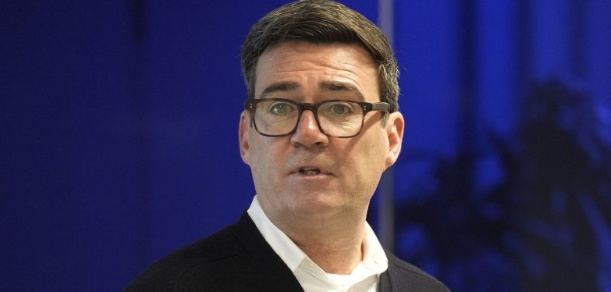
The coronation of Andy Burnham as the UK’s Prime Minister on 20th July means that he is the seventh Prime Minister (PM) in the last decade. Keir Starmer, Burnham’s predecessor managed to last two years and it seems possible that Burnham could only last as PM until the next general election in three years-time. This is because it is unlikely that Burnham, despite his smooth style and opportunism will be able to deliver the anti-austerity measures that the British people expect from a supposed left government and there is likely to be a complex mix of parties competing for support. Predicting the outcome of an election which is two or more years away is very difficult but a coalition government would seem the most likely outcome.
According to the opinion polls there has been a small uptick in support for Labour in the last four weeks, from 19.6% to 23% (Pollcheck) and this is matched by a fall in support for Reform UK from 27.3% to 24.4%. The Conservative Party stands at 20.1%. However, this shift in support towards Labour is not as significant as might have been expected given the hype around Burnham and problems with corruption in Reform, and the latter’s steady decline in the polls from a 30% high less than twelve months ago.
Burnham’s first five days in office led to largely peripheral policy announcements and in fact he has already rowed back on at least one pre-appointment pledge, which was to unfreeze personal income tax allowances (which would have meant small decreases in tax for most working people). In spite of Burnham saying that this was the issue he heard most about when “on the doorstep”, he has done a U-Turn on this promise because of the “difficult…financial circumstances in which we find ourselves.” At the same time, he has said nothing about increasing taxes on the super-rich and describes himself as “business friendly”. Burnham underlined this by a 20% cut in the business tax to pubs, clubs and music venues – saving the typical pub £1100 per annum.
On a slightly more positive note, Burnham has announced the scrapping of VAT (a form of taxation) on household energy bills, saving the typical household £45 a year. He has also reintroduced the £2 per journey bus fare cap. Both of the above measures, although welcome, are more symbolic than substantive. At the same time as the cut in VAT, the price cap on energy will increase, cancelling out any benefit. A promise to end rough sleeping carries no detail and Burnham’s talk of helping ordinary working people is not accompanied by proposals that will end austerity. His talk of building council (public) houses also carries no financial pledge.
Burnham’s cabinet includes many from the right of the Labour Party. According to the Financial Times, Burnham will “talk left and act right” and his appointment of John Healey as Chancellor and Emma Reynolds as Chief Secretary to the Treasury has pleased the City of London (the financial sector). Healey resigned from the Starmer cabinet a few weeks ago because of a supposed “£10 billion hole” in the Defence Investment Plan, deeming Starmer’s plans to cut other government departments in order to fund the plan to be insufficient. This indicates a determination to increase defence spending ahead of other government spending requirements.
Shabana Mahmood remains as Home Secretary and seems likely to continue her project of mirroring Reform policies – making life more difficult for asylum seekers in Britian but also continuing to feed into racist ideas about an immigration crisis. Pat McFadden will stay in post at the Department of Work and Pensions, to continue the attacks on disability benefits. Two of Burnham’s chief economic advisors are the right wing Andy Haldane, former chief economist at the Bank of England and Jim O’Neil, former treasury minister under Conservative Chancellor George Osborne. O’Neill has in the past, championed a call for the removal of the “triple lock” on pensions – removing the link between pension increases and rises in the cost of living, thereby threatening pensioner living standards in a country where the state pension is already extremely low by European standards.
94% of the Parliamentary Labour Party voted to nominate Burnham. This prevented the nomination of anyone else and indicated support for Burham from across the political spectrum within Labour, including the right wing, which in effect controlsthe Labour Party. This reinforces the view that Burnham will be unable to introduce progressive policies on nationalisation of public utilities. Burnham now talks instead of greater government oversight on this key issue. It must be remembered that when Burnham was Health Secretary for the Blair government, he was very welcoming to private investment in the NHS and it appears that nothing will change there.
The trade unions have broadly supported the appointment of Burnham and there has been pressure from Daniel Kebede General Secretary of the National Education Union NEU to cancel the proposed strike ballot by teachers. This proposal was rejected by the NEU National Executive and the strike ballot will go ahead unless a new, improved deal is put on the table by the Burnham government, which seems unlikely. The UNITE NEC voted overwhelmingly to back Burnham, but according to an insider, they all have strong reservations about his ability to deliver for ordinary working people. It will be interesting to see how much progress is made on the moves for UNITE to disaffiliate from the Labour Party and this needs to remain firmly on the agenda of the UNITE rules conference that takes place next year. There have also been no demands forthcoming from UNITE or the other affiliated unions demanding worker friendly policies from Burnham.
Although many people will hope that Burham’s promise of the greatest change to government for 40 years and of getting rid of the ideas introduced by Thatcher might be realised, these words must be backed by deeds. When Thatcher was first elected in 1979, she talked of ending discord and bringing unity – her way to achieve this, as we now know, was to smash the unions and introduce full-blown neo-liberal economic policies. Burnham talks about change but in fact proposes more of the same with only minor concessions to the working class. He supports exaggerated rhetoric about the threat of a Russian invasion of Europe, in order to continue the feeding frenzy around arms spending and to distract the population’s attention away from the real issues impacting their lives. The supposed joint threats of war and immigration are proving useful tools in the effort to distract people from fighting for real change in society.
For the left the struggle continues. The awful collapse in support for Your Party must be counteracted by concerted efforts on the left to bring new forces that have emerged and existing forces together in a coalition of the left. People who have stopped talking to one another need to reconnect, people new to politics need to make themselves heard and demand open democratic methods fitted to the current epoch. A new strategic plan for the left needs to be formulated with the widest possible participation of all the forces who wish to play a part and for those who don’t one must ask – why? The situation in the UK and across the world could not be more pressing and the need for unity more critical.