


The following article is a translation of an article posted on the Xekinima (ISp Greece) website in December 2019. It has been translated into English with the opportunity of the COP 31 people’s counter summit in Antalya-Turkey, where ISp intervened, with leaflets, a brochure and other material
What do children’s toys, contact lenses, acrylics, nylon and polyester fabrics, car seats and dashboards, athletic shoes, house paint, nail polish, and mascara have in common? They are made of, or contain large amounts of plastic. Industrial production of plastics began in the late 1950s, and since then, plastics have become indispensable in our everyday lives. [1]
More than seventy years after its industrial production, plastic has not only flooded our lives but also every corner of the earth. Plastic waste has been found at the deepest point in the oceans, in the Mariana Trench (11 km from the surface) [2] in the Arabian Desert, [3] in the waters and ice of Antarctica, [4] in the snow of the Alps and the Arctic Circle, [5] as well as in the stomachs of countless animals. Whales, [6] cows, [7] deer, [8] and camels [9] are just some of the animal species that die with their stomachs full of plastic waste.
There is also widespread pollution from microplastics (plastics less than 5 mm in length, which are either manufactured at that size, or are fragments of larger pieces of plastic) and nanoplastics (plastics with a diameter of less than 100 nm). Microplastics and nanoplastics have been detected in the water we drink, [10] in salt, honey, and beer [11], as well as in the intestines, fat, and meat of fish [12] and poultry, [13] in rain [14] and even in the air we breathe. [15] Plastic is now everywhere – including inside our own bodies. [16]
The consequences of the extent to which plastic has permeated our lives are very serious. They affect not only our health but also the survival of countless species on the planet. Furthermore, in recent years it has been proven that plastic contributes to global warming and the climate crisis.
Eliminating single-use plastics (though necessary) and increasing recycling cannot solve the problem. In fact, we must treat plastic the same way we treat fossil fuels. We must demand and fight for its replacement with safe and eco-friendly materials in all applications (with the possible exception of a few minor cases that need to be discussed on a case-by-case basis).
Let’s briefly look at the four main reasons why we must advocate for the elimination of plastics – understanding from the outset that such a complex issue cannot be fully covered in a single article.
1. Plastics pose serious risks to our health
Plastics are made up of hundreds of chemical compounds produced by the chemical industry. The industry is not required to prove that a substance is safe for humans and the environment before using it in production, while at the same time, no government or international organization has adopted an effective system for regulating these substances.
Hazardous “Building Blocks” and Additives
There are also serious health hazards from the use of many of the “building blocks” of plastics, as well as the chemical additives [17] that are necessary for plastics to acquire their various properties: elasticity, transparency, heat resistance, resistance to atmospheric oxidation and UV radiation, reduced flammability, lubrication, etc.
The Example of Styrene
Styrene (S), for example, is a building block of polystyrene (PS), a type of plastic widely used to manufacture disposable plastic cups and food packaging (e.g., the plastic trays used for packaged meats and mushrooms, the material used in fish containers, etc.). It is also a component of many other plastic items (e.g., razors, school rulers, pipes, insulation materials, rubber) and is found in printer and photocopier inks.
It has been known for decades that styrene has a toxic effect on the nervous system, and according to a number of studies, it is also carcinogenic (the styrene industry, of course, denies this, citing its own studies).
In the human body, styrene enters primarily through the food and beverages we consume, as it “migrates” from packaging and “leaches” into food and beverages. It is also absorbed through inhalation (e.g., in places where photocopiers are present). [18]
The Example of Flame Retardants
When it comes to chemical additives, a prime example is flame-retardants, which are found in a wide variety of plastics, such as children’s toys, televisions and computers, mattresses, curtains, the foam padding in car seats and furniture, and so on.
Although there are many different flame retardants, all have been found to be associated with adverse effects on one or more of the following systems of the human body: the endocrine, immune, nervous, and reproductive systems.
Some of the diseases they may cause include cancer (primarily of the uterus and liver), thyroid disorders, learning disabilities, delays in cognitive and physical development, and fertility problems.
A number of flame retardants, such as “polybrominated diphenyl ethers” (PBDEs), “short-chain chlorinated paraffins” (SCCPs), and others, have been officially classified as “Persistent Organic Pollutants”. These are pollutants that persist in the environment because they cannot be broken down by the chemical or biological processes that occur in nature, and which accumulate in the bodies of humans and animals – because they are eliminated at an extremely slow rate. [19]
Flame retardants are literally circulating in our blood. A series of studies has detected “polybrominated diphenyl ethers” (PBDEs) in 97% of people tested in the U.S., while “short-chain chlorinated paraffins” (SCCPs) have repeatedly been detected in the breast milk of women in China. In general, the greatest accumulation of PBDEs, SCCPs, and other flame retardants in the human body occurs during infancy, through breast milk consumed during breastfeeding. [20]
Plastics attract persistent organic pollutants
In addition to hazardous structural materials and additives, one of the characteristics of plastics is that, when they are in water, they attract and “absorb” Persistent Organic Pollutants (POPs).
As mentioned above, these are extremely persistent pollutants that are (for the most part) created by industry or are byproducts of industrial (or other human) activity, and they are highly toxic to the human organism.
The best-known Persistent Organic Pollutants are dioxins (e.g., 2,3,7,8-TCDD), furans, polychlorinated biphenyls (PCBs), and polycyclic aromatic hydrocarbons (PAHs).
According to the WHO (World Health Organization), exposure to even very small amounts of Persistent Organic Pollutants can cause, among other things, cancer, DNA mutations and genetic abnormalities, disorders of the reproductive and endocrine systems, alterations in the immune system, diseases of the nervous system, and more. [21]
One of the ways in which plastics that have absorbed Persistent Organic Pollutants end up in the human body is through the consumption of fish, shellfish, etc., which contain microplastics in their flesh, fat, and intestines.
The Ingestion of Microplastics and Nanoplastics
As we mentioned at the beginning, microplastics and nanoplastics are everywhere. In the air we breathe, the water we drink, the rain, our food, and so on. In the Western world, it is estimated that the average person consumes 5 grams of plastic each week – the equivalent of a credit card. [22]
Although there is not yet enough research on the health effects of consuming microplastics and nanoplastics, scientists are concerned. Research presented at the first Conference on Plastics and Health showed that cells in our immune system attack microplastics and in many cases die at a faster rate, that the development of the airways is impeded by plastic microfibers, and that microplastics most likely cross the placenta. [23]
This knowledge adds to what scientists already know about the toxic effects of plastics and their ability to attract persistent organic pollutants.
Is there such a thing as safe plastic?
A study published in 2011 in the scientific journal “Environmental Health Perspectives” examined more than 450 everyday products made of different types of plastic and purchased from various stores. The researchers focused on whether these products “leach” chemicals that affect the endocrine system, such as BPA or phthalates, which mimic the action of estrogen and other hormones in the body:
“Almost all commercially available plastic products that we examined – regardless of the type of resin, the type of product, or the store [from which they were purchased], leach chemicals with detectable estrogenic activity, including those advertised as ‘BPA-free.’ In some cases, ‘BPA-free’ products released chemicals that had greater estrogenic activity than products containing BPA”. [24]
Chemical compounds that affect the endocrine system (endocrine disruptors) are linked to autism, childhood asthma, and a range of cardiovascular problems such as hypertension, arrhythmias, and heart attacks. Furthermore, they increase the risk of breast and prostate cancer; suppress insulin production leading to type 2 diabetes; they can cause DNA damage; as well as lead to erectile dysfunction and a decrease in sexual desire – to name just a few examples. [25]
All diseases that have seen a dramatic increase over the past 50-60 years –from obesity to autism and from cancer to autoimmune diseases of the nervous system– are linked, among other factors, to plastics.
In the documentary Plastic Planet, [26] director Werner Boote discusses this issue with renowned biologist Fred Fom Zaal of the University of Missouri.
Fred Fom Zaal: I would say that at this point we cannot say that there is any such thing as safe plastic.
Werner Boote: But we’re still alive.
Fred Fom-Zaal: That’s a very good point. These chemicals don’t kill you. They impair your quality of life. They cause asthma, obesity and brain dysfunction.
Werner Bothe: On the other hand, though, all these materials also help me stay alive. I go to the hospital, and everything is made of plastic.
Fred vom Saal: Yes, so when you go to the hospital for chemotherapy and radiation to treat the cancer that these chemicals caused, you might ask yourself, “Have they really improved my quality of life?” That’s the question.
2. Plastic is silently killing wildlife
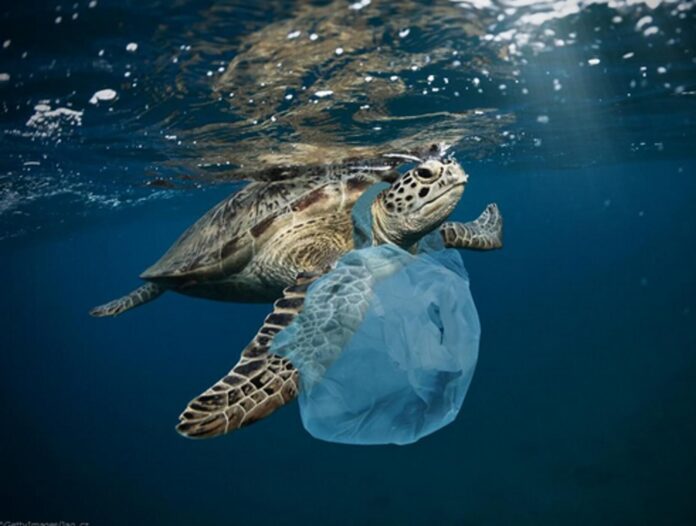
The BBC documentary series “Blue Planet II” highlights, among other things, the extent of plastic pollution in the oceans. In one of the episodes, it shows albatrosses (seabirds) feeding their chicks plastic debris instead of fish and mollusks! Plastic in the ocean becomes colonized by algae and microorganisms. Within a few days, it begins to smell and look like food, causing millions of seabirds to consume it, leading to a slow death. [27]
Due to plastic waste, 1 million seabirds, [28] 100,000 marine mammals (dolphins, whales, seals, etc) [29] and countless other fish and marine animals die each year globally. This figure refers only to animals whose deaths have been confirmed in some way by humans and does not represent the actual total number.
However, the problem is not limited to the oceans. Cows, deer, bears, and many other animals have been found to die from ingesting plastic waste. Plastic doesn’t kill animals just because they mistake it for food. Many photos circulating online show that plastic trash acts as traps –or even death traps– for wildlife (e.g., birds trapped in plastic bags).
Furthermore, plastic pollution in the oceans, lakes, and rivers can cause infections, hormonal disorders, reduced fertility, and even hermaphroditism in fish and other animals that live in and feed on marine environments! [29] These are just a few of the effects of plastic pollution on the ecosystem, while the scientific community clearly states that the full impact is not yet known. [30]
3. Recycling is not the answer to the problem of plastic pollution
99% of plastic, which is made from hydrocarbons (derived from natural gas and oil – in China, coal is also used to produce plastics), is not biodegradable.
Over time, it breaks down into smaller and smaller pieces –which can even reach the nanoscale– but it does not break down into its constituent elements (carbon, hydrogen, etc.). Every piece of plastic ever made continues to exist in some form on Earth, with dramatic consequences for humans, animals, and the environment as a whole. [31]
From the 1950s, when industrial production of plastic began, to the present day, 8.3 billion metric tons of plastic have been produced, [32] with 300 million metric tons added to that total each year. Half of this amount is used for single-use plastics! [33]
Globally, only 9% of the plastic produced is recycled. The rest ends up, in one way or another, in water, the soil, the air and the bodies of animals and humans.
Can we possibly solve the problem by investing in recycling and drastically increasing the percentage of plastic we recycle? The answer is no.
Many plastics are not recyclable – they are not manufactured in a way that allows them to be recycled. However, even among those that are recyclable, the vast majority can be recycled only once.
Unlike glass and metals (including aluminum), plastic cannot be recycled indefinitely. [34] Thus, after 1, 2, or 3 life cycles, recyclable plastic will end up in a landfill or be discarded directly into the environment.
Of course, incinerating plastic –a practice widely used in many countries– is not a safe method of managing plastic waste. Waste incineration, even in the most modern facilities, produces toxic gaseous pollutants such as dioxins, furans, benzene, chlorofluorocarbons, and other persistent organic pollutants. Equally toxic and laden with dangerous heavy metals is the ash resulting from the incineration of plastic, the safe management of which is practically impossible.
4. Plastic contributes significantly to global warming and climate change
It is estimated that in 2019, all the plastics that were produced globally, generated 850 million metric tons of greenhouse gases over their life cycle (extraction, transportation, refining, plastic production, and incineration).
This amount is equivalent to the emissions from the annual operation of 189 conventional power plants, each with a capacity of 500 MW. By 2030, these emissions are estimated to be the equivalent to the annual operation of 295 power plants with a capacity of 500 MW, and by 2050, to the operation of 615 power plants. According to the researchers themselves, these estimates are conservative, as they did not have access to a number of key data points. Furthermore, the above greenhouse gas emission figures do not include greenhouse gas emissions from plastic waste incinerated in facilities where no energy is recovered, from the open-air burning of plastic waste, nor from plastics found in landfills or discarded somewhere in the natural environment. [35]
When plastics are exposed to the sun, they begin to release methane and ethylene. The release of these gases from the plastic continues even after the sun goes down, even in the dark.
In general, the more the plastic degrades, the greater the release of methane and ethylene. [36] Methane and ethylene are greenhouse gases, with methane being 30–35 times more potent than carbon dioxide (CO₂) in terms of global warming. When we consider that plastic waste –as well as worn-out plastic items that we still use– amounts to billions of metric tons, we realize that it is a significant factor in global warming and the climate crisis.
Plastics play a role in the climate crisis in yet another crucial way. They affect the oceans’ ability (as the planet’s largest CO2 sink) to absorb CO2.
More specifically, they affect the growth of phytoplankton and its ability to sequester CO2 and photosynthesize. At the same time, microplastics also affect zooplankton, which deposit CO₂ on the ocean floor (zooplankton eat phytoplankton that have sequestered CO₂ and deposit it in the form of feces on the ocean floor).
Furthermore, it’s observed that some zooplankton tend to eat microplastics instead of phytoplankton, reducing the amount of phytoplankton they consume by 40% or more, once they start eating microplastics. [37]
Are there alternatives?
What should we do with a material that harms human and animal health, is not biodegradable, cannot be recycled (repeatedly), and contributes significantly to the climate crisis? We must fight for its gradual replacement in all applications in the short term, starting with an immediate ban on single-use plastics and drastically funding research on safe and eco-friendly alternatives.
Some initial steps have already been taken: for example, packaging materials made from mushrooms, fabrics made from soured milk or banana peels, etc., have been developed, [38] as well as new ways of processing traditional materials such as wood. “Wet wood” technology, for example, allows wood to be given properties and shapes that previously required a great deal of labor, skill, and high costs. [39]
All of the above alternatives, of course, need to be further researched to ensure that they are safe for human health and that their mass production will not negatively impact the environment and society. For example, a range of so-called “eco-friendly plastics” (PLAs – Polylactic Acid, etc.) made from cornstarch, sugarcane, etc, have been shown to exhibit estrogenic activity similar to that of conventional plastics, [40] while they biodegrade only under specific industrial composting conditions.
But we need to be clear on something: none of the above materials –nor any renewable resource, for that matter– can truly sustain the current model of overconsumption that exists in the industrially “developed” world.
We can look for alternatives to replace reusable and single-use plastics, which, at this stage of technological development and knowledge, cannot be eliminated (e.g., the medical field). However, there is no plant or natural material on the planet that can “sustain,” without consequences, a culture that, on a global scale, throws away 500 billion single-use plastic coffee cups every year.
After all, it hasn’t been that long since the use of corn and other crops for biofuel production led to a sharp rise in their prices, triggering, among other things, uprisings in the developing world, where basic foodstuffs became unaffordable.
We also know that other “natural products” industries cause massive ecological disasters. In Indonesia and other parts of the world, vast tracts of tropical forests are being destroyed to make way for palm plantations, as palm oil is the most marketable oil in the world.
Therefore, the shift toward alternatives to plastic must be combined with a rejection of single-use products, a rejection of overconsumption as a whole in the developed world, and a rejection and transformation of the mindset cultivated by capitalist industry. This does not imply a lower standard of living in material terms. It implies a radical reorientation of the economy and industrial production, as well as a different value system.
In this direction, we can find solutions to replace plastic in its various applications, including replacing it with natural materials in some sectors (e.g., metal, wood, etc.) with biodegradable polymeric materials in others (e.g., made from mushrooms or food waste), with solutions that the emerging field of biomimicry may offer (the synthesis of materials with functions that mimic natural processes), etc.
There can be no solution within the framework of the capitalist system
But can we, within the framework of the current system, proceed with the radical reorientation of the economy and industrial production that is required? Can we convince the plastics industry to stop producing plastic and invest in new technologies? Can we convince the oil and natural gas industry to abandon hydrocarbons and shift to renewable energy sources, hydrogen technology [41] and other green technologies? Can we convince the 26 people who possess as much wealth as half the world’s population to share it? [42] The answer is, of course “no”.
We need to overthrow capitalism in order to eliminate hunger, poverty, oppression, exploitation, and destitution. We also need to overthrow capitalism in order to save the planet and our lives. And we need to replace it with a socialist society, one that respects the environment and the connection between life and nature.
We need to fight for:
- An immediate plan to phase out the use of fossil fuels for energy production and plastic manufacturing.
- Nationalization, under conditions of workers’ control and management, of mining companies and companies that generate energy from fossil fuels. Turn these companies into renewable energy sources, by the use of green technologies, as well as safeguarding jobs for workers, without any reduction in rights or wages.
- Immediate phase-out of single-use plastics, a drastic reduction in plastic packaging, and a plan to replace plastic with natural materials and other (truly) eco-friendly and safe solutions in the short- to medium-term future.
- Drastic funding for research into materials that can replace plastic in all applications and for the development of green energy technologies. This research must be conducted by independent public institutions; it must be owned by society and not subject to profit-seeking by large private corporations and multinationals.
- The planning of production and of the economy, based on the needs of the vast majority in society, rather than on the profits of a small minority.
- Nationalization of the key industries –including plastics– under democratic workers’ control and management. Replacement of plastic raw materials with eco-friendly materials in the industries that produce socially useful goods combined with retraining for workers without job losses or any reduction in wages or rights.
- A new, socially useful direction for industries that produce wasteful packaging and objects, while retraining workers and safeguarding all jobs without any reduction in wages or rights.
- Internationalism and international coordination of struggle – the environment is the preeminent problem that cannot be solved at the level of nation-states; it requires planning at the international level, which is why a struggle at the international level is also necessary.
- The overthrow of capitalism and the building of a society free from oppression, poverty and destitution, where all decisions will be made through truly democratic processes and guided by the interests of society as a whole. This is a socialist society in the true sense of the term and not as it has been discredited by Stalinist-style regimes or by Social Democracy.