

Scientists warn that this year’s El Niño will probably be the most intense that has ever been recorded. El Niño is a natural climate phenomenon that occurs every 2-7 years, and affects weather events around the globe. The consequences of this development will include more intense extreme weather events and mass destruction of crops, leading to famine and displacement for large numbers of the population in different areas of the planet.
What is El Niño, and how is it linked to climate change?
ENSO (El Niño Southern Oscillation) is a climate pattern in the Pacific Ocean affected by changes in the atmospheric pressure, with three different phases:
- El Niño, the warm phase, when the temperature of the water in Central Pacific around the Equator is at least 0.5C above average,
- La Niña, the cold phase when water temperatures are 0.5C or more lower than average, and
- the neutral phase (when the water temperature is close to average).
These differences occur due to the winds that push warm water from one side of the Pacific Ocean to the other. During El Niño’s neutral phase, the wind pushes warm water from the east to the west (from the west coast of South America to Australia and Asia). This is when surface temperatures remain close to average and extreme weather events are less intense and less frequent. When the winds that push warm water towards Asia are weakened, or even change direction, the water temperature at the South American coasts and the Central Pacific rise (El Niño – warm phase of ENSO). The other extreme phase of ENSO, La Niña, is when the winds of the natural phase get stronger, cooling the water more than average.
This phenomenon affects many different areas around the world, by many different ways: floods and droughts, extreme heat and wildfires, reduced fish population, destroyed crops, etc, from both sides of the Americas, to Australia and Asia, even Africa. For example, when El Niño hits, there can be heavy rain and floods in Peru, as well as extreme heat and wildfires in Indonesia or Australia. Extreme weather events are also expected around the world during the cold phase of ENSO (La Niña).
“Godzilla El Niño”: higher temperatures and climate change
This year’s El Niño (started in June 2026 and is expected to peak during winter) has been called by many “Godzilla El Niño”, or “Super El Niño”.
Months before its peak, temperature rise around equatorial Pacific has already reached 3,05C (in order to declare “El Niño”, temperature rise has to be at least 0,5C)!
Many climate scientists believe that the combination of El Niño and climate change is especially dangerous, since the natural phenomenon of warm water movement is now occurring at a time when global sea temperature is higher than ever in recent history.
As quoted by “The Guardian”, professor Friederike Otto, at Imperial College London, says:
“This event is a huge redistribution of energy in the climate system and is dangerous because it is unfolding on top of a much warmer, human-influenced climate system … El Niño comes and goes, but as long as we continue to burn fossil fuels it occurs on an increasingly hotter baseline, making it much more difficult for communities to deal with the consequences”.
“Our global climate is already at elevated temperatures and El Nino-driven warming from the Pacific Ocean adds additional strain onto wildlife, people, and infrastructure. New research also appears to show that climate change is directly influencing El Niño by strengthening and increasing the frequency of events – in particular, increasing coral bleaching frequency around the Galápagos Islands”.
Who will pay the price?
According to the University of Chicago, Super El Niño could cause an extra 450,000 heat deaths globally: 66,800 across the Sahel, 19,300 in Indonesia, 17,600 in Sudan, etc. Countries in South East Asia, Africa and South America are expected to be severely affected.
FAO (United Nations Food and Agriculture Organisation) warns that the same regions will, in the next few months, be hit hard by extreme weather events (droughts, floods, landslides, etc) that can destroy crops and livestock and increase the risk of disease. Millions of people will be at risk of starvation, especially in the farming and fishing communities of these regions.
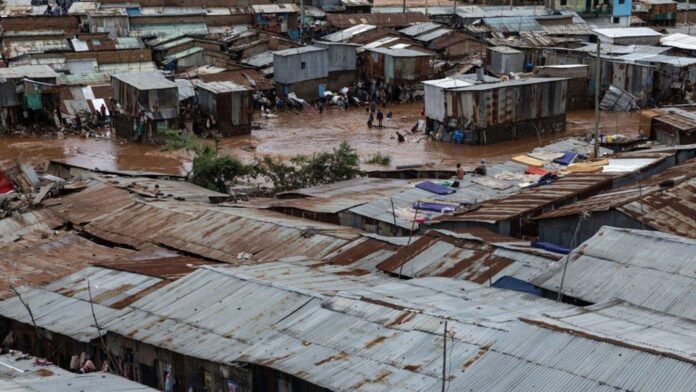
In a BBC report, a journalist from Kenya describes what people in his country expect and how they are preparing for Super El Niño. In the coming months, El Niño is expected to bring persistent rainfall, leading to floods and landslides that can destroy houses and infrastructure and lead to deaths, especially in the slums, where during these events many people are drawn inside their shanty houses or cars. People are trying to clean the drainage system in preparation, with very little, or none at all assistance from the state.
In Indonesia, El Niño has already visible effects, fuelling the worst wildfires of the last decade that have been going on for months. Tenths of thousands of people are experiencing serious health issues as a result of the exposure to the wildfires’ smoke.
The poorest people, in the poorest areas of the world, those who cannot protect themselves from extreme weather events, are not the only ones affected. Many of the worlds ecosystems, the biodiversity they preserve, land, water, plant and animal populations, are also in danger. To mention just one example, Super El Niño is expected to affect marine wildlife, as the surface’s hot water keeps the cold water, which is rich in nutrients, trapped below. This leads to reduced fish populations, and consequently starved sea birds and mammals.
Who will protect nature and people?
The only ones who are not in danger are those who belong to the rich minority of this planet, the big corporations and the governments supporting their interests. So far, they have done nothing of any substance to protect the planet and its people from the dramatic effects of the climate crisis and environmental degradation as a whole. Needless to say that we can’t expect them to take the required measures to protect the world’s most vulnerable populations from the effects of El Niño.
Those who have based their profits in extracting and burning gigantic amounts of fossil fuels, wasting one third or the world’s food production while hundreds of millions go hungry, and who destroy ecosystems and biodiversity by exploiting natural resources up to depletion, cannot be trusted with handling any serious threat the planet is facing.
Working people around the world, environmental movements and organizations, trade unions and the organisations and parties of the Left globally, need to organize coordinated struggles to demand immediate action in order to protect the people who are in direct risk of losing their homes, their means of survival, or even their lives as a result of extreme weather events, not just in the next months (while El Niño is progressing); but also in the following years, as the effects of global warming will continue to grow. We also need to demand massive public investment in research on renewable energy sources, and the immediate implementation of a plan to utilize them in order to end dependence on fossil fuels as soon as possible. The energy multinationals must be brought under public ownership, with workers’ control and management, as part of socialist planning on both a national and international level.