
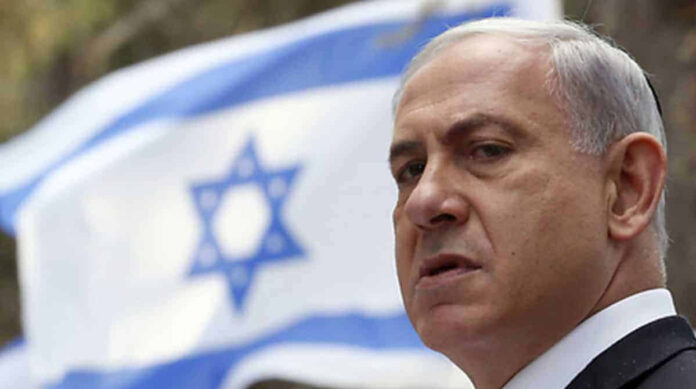
Israel’s election represents a setback for outgoing Prime Minister Netanyahu and the Likud party. It was not a clear and decisive defeat, and there was no clear winner between the two competing electoral blocs seeking votes from the Jewish community.
The Netanyahu-led bloc won 53 seats, and the opposition-bloc led by Gadi Eisenkot’s Yashar! Party, gained 48. The close result disguises the fact that Netanyahu and the Likud did suffer a significant loss in the election – it won 21% of the vote and lost 9 seats. Neither bloc has the 61 seats needed to form a majority government and now a period of negotiation has opened as each bloc seeks the extra votes it needs.
In one sense there was a winner however – two political blocs which gain the vast majority of their votes from the Arab community, elected 19 Knesset members between them, the highest for such parties ever. Turnout in the election was 77.7%, the highest since 1999 and more than seven percentage points above the last election in 2022. Participation among Arabs was 80%, approximately twice the usual turnout.
Shift to Right Checked
Israel can best be described as a partial ‘democracy’: it holds regular elections like other bourgeois states, but full democratic rights are heavily restricted. The 5.5 million Palestinians living under occupation do not have a vote and the Arab population of Israel are second class citizens both in law and in practice.
Elections provide a snapshot of moods in society, and the consciousness of various layers, at a moment in history, but also reflect longer term trends. The high turnout represented a mood to eject the outgoing right-wing government-the most right-wing in Israel’s history — and especially the extreme right. The right remains strong, particularly among younger voters, and this generation is more right-wing than its parents. Nevertheless, many Jewish people voted for less-right wing or centrist Zionist parties to oppose the worst excesses of the outgoing regime, thus checking the move to the right of the majority of Israeli Jews which has been a feature of the last 30 years. This is a positive development, but a very limited one.
Israel is a divided society, and politics is not determined by primarily by class issues and does not neatly divide along left-right lines. There is no left formation which is strong enough to challenge the various wings of Zionism for the votes of Jews. The Democrats are broadly speaking “left” – they are affiliated to the Second “International” which brings together labour and social democratic parties (such as the British Labour Party), for example. For decades the Labour Party was the dominant political force in Israel and promoted what is sometimes described as “left Zionism”, with strong trade unions, and forms of state ownership. Labour did badly in the 2022 election, only just winning enough votes for entry into the Knesset. A second left party, Meretz, failed to cross the electoral threshold. In response to these setbacks Labour and Meretz agreed to merge in July 2024, forming a new political party called The Democrats. The Democrat’s vote does not come from the working class in the main but from the Ashkenazi middle and upper-middle classes. It doubled its seats in this election, from 4 to 8.
Of greater significance is the vote for the Joint List, a left bloc which wins votes mostly in the Arab community but has Jewish members of Parliament. It consists of three parties: Hadash, Ta’al and Balad.
Hadash has the Communist Party of Israel at its core. It supports Israel withdrawing to its pre-1967 borders and a Palestinian state. Ta’al, emphasises Palestinian national rights and equality for Arab citizens. Balad advocates transforming Israel into a single state with equal rights for all.
The Joint List won 500,147 (9% of the total votes cast) and increased its number of seats from 5 to 11. 10-15,000 Israeli Jews are thought to have voted for the Joint List.
A second formation, Ra’am, an Islamic bloc led by Mansour Abbas, won 337,253 votes (6%) and went from 5 to 8 seats.
What happens next?
The largest party is still Likud, but the decisive question is who can bring together enough Knesset numbers to get over the 61-seat threshold. A “national unity” government involving Likud and sections or all of the opposition cannot be excluded.
A second possibility is that the anti-Netanyahu bloc, the Joint List and Ra’am together use their numbers to install Eisenkot as PM. This could be achieved without a formal coalition, with the Arab-based parties remaining outside what would be a minority government. Sharp disagreements make such an arrangement possible but difficult. Eisenkot has ruled out a coalition with Arab-majority parties. Yair Golan of the Democrats has called for the anti-Netanyahu parties to cooperate with Arab-majority representatives to secure a majority. Opposition leaders Naftali Bennett and Avigdor Lieberman have rejected cooperation with Arab-majority parties, at least to date. Eisenkot rejects the establishment of a Palestinian state whilst opposing some settlement initiatives and has spoken against unauthorised outposts and extremist settlers. The Democrats are more critical of settlement expansion.
According to Abbas both blocs had been in contact with his party before and after the election. There is a precedent for Ra’am: in 2021 it joined the Bennett-Lapid coalition, becoming the first Arab-majority party to participate formally in a governing coalition. It achieved some limited gains with investment in Arab areas with and measures to tackle violent crime. The Joint List parties have previously rejected participation in government although they have shown willingness to support a government from outside.
The Joint List could possibly support the removal of Netanyahu without accepting cabinet positions or endorsing the programme of an Eisenkot-led government.
Standing Together
A glimpse of what is possible, even within the confines of Israel limited democracy, and at a time of conflict, is given by the role of “Standing Together”. This movement aims to bring together Arab Israeli and Jewish Israeli communities in the struggle for Israeli-Palestinian peace, equality and social justice.
Standing Together first became active in 2015 and has been able to reach 7,000 members – a modest number but of significance in a country with a population of 9 million. Many of the founders were members of the political coalition Hadash and the Communist Party of Israel.
Standing Together opposes the Israeli occupation of the Palestinian territories and supports full equality for Palestinian citizens of Israel. It takes left positions on issues such as LGBT rights, women’s rights, and workers’ rights. Since the onslaught on Gaza began in October 2023, the movement has played a role in the anti-war and pro-ceasefire protests within Israeli society. Its leadership has roughly equal representation of Jews and Arabs and publishes all its material in both Hebrew and Arabic.
Standing Together considered running in the election, and formed a party, Makom LeKulanu for this purpose. Ultimately, it chose not to contest the election, after unsuccessful negotiations with Ta’al and the Joint List. If it had run it seems likely that it would have mobilised an anti-war and anti-occupation vote in the Jewish community, though whether this would have crossed the threshold of 3.25% for representation in the Knesset is unclear.
Standing Together is a key organiser of the huge post-election rallies calling for the anti-Netanyahu bloc and the Arab parties to form an alternative government. Such a government, or minority government supported from outside, on a vote-by-vote basis, could bring some limited relief to Palestinians in Gaza and the occupied West Bank, and Israeli Arabs. The Netanyahu government has implemented a genocidal war in Gaza, and overseen settlement expansion and settler violence in the West Bank. It will continue to do so if it can build a new coalition, perhaps including elements from the right-wing of Eisenkot’s bloc.
Need for a shared struggle for a socialist future
For now, the people of Gaza continue to suffer unimaginable horror, and the Palestinians of the West Bank are under daily assault, both from the IDF and from armed settlers. This is a monstrous injustice which must be brought to an end.
Endless repression of the Palestinian people will not deliver peace and security for Jewish people. Only a shared struggle for a socialist future can deliver justice and peace for all. Such a struggle can seem unrealistic, even impossible, at times, but it can come and it will come. The recent developments in Israel point in the right direction.