

In the postmodernist world that we inhabit, truth can be the victim of propaganda and the promoters of lies the beneficiaries. As with any police state or totalitarian regime the truth tellers will be pursued and libelled. Their ability to reflect reality – the duty of any artist or documentary film-maker, will be curtailed and their output supressed.
The anger elicited from the genocidal state of Israel and its spokespersons at the release of the film Naza and their rage at the tributes paid to it, reflects their cynical need to deny their actions and justify their own far-right, racist positions.
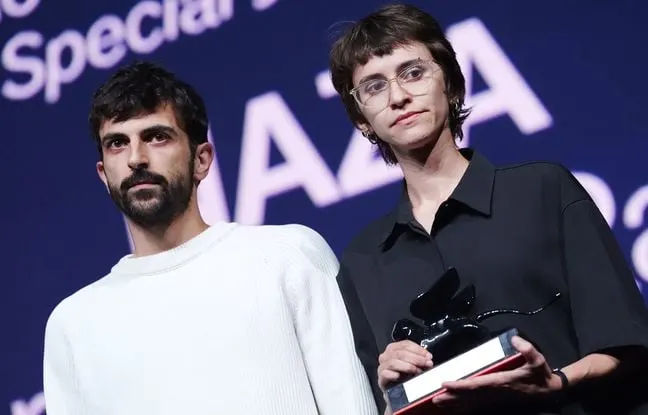
Naza is a British film made in Tel Aviv by film documentary film makers: Yuval Abraham and Rachel Szor. It describes the mass killings of civilians in Gaza. The term Naza, derived from the Hebrew term “nezek agav” (collateral damage), is used by the Israeli intelligence services to assess how many civilians it expects to kill in an airstrike. The film uses sources such as: the Guardian newspaper, +972 Magazine and the Hebrew language outlet Local Call to provide background. It also, and very importantly, uses anonymised interviews with 24 Israeli military and intelligence insiders.
Abraham and Szor previously collaborated on the film: “No Other Land” (2024), which focussed on Israeli settler violence against Palestinian communities on the West Bank. This film won the Academy Award for Best Documentary Feature Film.
Naza has recently (10 September) received acclamation at the 83rd Venice International Venice Film Festival where it will compete for the Golden Lion. It is the only documentary film selected for the festival’s main competition and received a 25-minute standing ovation, the longest in the history of the festival, after winning the special jury prize.
As a response to the spotlight thrown on Israeli atrocities by the film, the Israeli regime has gone into overdrive in an effort to attack and denounce the film. Benjamin Netanyahu has said that he will seek new laws to strip Israeli citizenship from those who “smear” Israeli soldiers. Abraham and Szor have also received threats from government and military officials. Miki Zohar, the Israeli Minister of Culture, has asked for their citizenship to be revoked and groups of far-right activists have gathered outside their families’ home. Far-right activists are organising other protests outside addresses linked to the directors and the Israeli state is mobilizing its intelligence services to act against supporters of the film. The IDF chief of staff, Eyal Zamir said that the military will “use every tool at our disposal” against the film.
Meanwhile supporters of the film are attempting to counter these attacks. Human rights groups and other film makers have voiced their support for Abraham and Szor. In a joint statement, 43 local human rights organisations have urged the Israeli authorities to stop incitement and threats against the film makers. More than 1500 Israeli film makers have signed a petition defending the right to freedom of expression and creation. Prominent figures in international cinema have also expressed solidarity.
Naza has not yet gone on general release to the public. Its North American premiere will take place at the Main Slate on the 2026 New York Film Festival on 25th September. It remains to be seen as to how widely the film will be distributed.
It is vitally important that films such as Naza are seen aswidely as possible and the right to freedom of expression is defended. Globally and particularly in most Western “democracies”, we face increasing laws that limit freedom of protest and political expression. The access to radical and compelling political content in the cinema is often stifled by the industry itself.
As the Israeli inspired rhetoric and political pressure against Naza builds, it is up to working class and left activists and progressive people, film makers and independent cinemas to champion Naza and make sure it reaches the widest possible audience.