

The world has entered a new and dangerous phase of capitalist crisis. Militarisation is no longer a secondary question or a temporary policy choice. It is becoming one of the central ways through which ruling classes try to manage the crisis of their system.
Across the world, military budgets are rising, arms production is expanding, nationalist propaganda is intensifying, and societies are being prepared for war. The crisis of US hegemony, marked by the relative decline of its economic dominance, and its increasing reliance on military power to defend its global position, the sharpening conflict between the US and China, Russia’s invasion of Ukraine as a response to NATO’s expansion Eastwards, Israel’s genocidal war on Gaza, war against Iran, the growing militarisation of the Pacific around Taiwan etc reflect the increasingly violent reorganisation of capitalism.
Trumpism is not simply the “madness” of one individual. It expresses the deeper crisis of US capitalism and of the post-war order built around US imperialist domination. The United States remains the strongest imperialist power, but it can no longer rule the world in the old way. This makes it more unstable, more aggressive and more dangerous.
At the same time, the rise of China as a capitalist power is posing a direct challenge to US hegemony. We reject the idea that China represents a progressive or anti-imperialist alternative. China has its own ruling class, its own forms of repression, its own regional ambitions and its own role in capitalist competition. Our position must be independent of all imperialist and capitalist camps. We oppose US imperialism, NATO and Israel, but we do not politically beautify China, Russia, Iran or any other authoritarian capitalist regime. On the other hand we recognise that the rise of new powers challenging the old balance of forces, enables weaker nations to navigate between conflicting imperialist interests and resist imperialist aggression especially on the part of the US and the European powers who dominate the planet (despite the clashes between them, in the Trump II era).
The same independent class position is necessary on the issue of Ukraine. We oppose Russia’s invasion and defend the right of the Ukrainian people to self-determination. But we also reject NATO militarisation and the false idea that NATO is a force for democracy or liberation. The working class has no interest in choosing between rival capitalist blocs.
On Palestine, the picture is clear. The Palestinian people’s struggle for freedom must be defended unconditionally. Israel’s occupation, apartheid system, ethnic cleansing and genocidal war on Gaza must be opposed without hesitation. But our perspective for a real solution is not based on nationalist rivalry or imperialist diplomacy. It must be rooted in the working class, internationalism, equal rights for all peoples, and the liberation of all oppressed communities in the region.
The question of Iran also demands political clarity. We oppose US and Israeli aggression, sanctions, blockades and military threats. Any attack on Iran would risk massive regional instability, an oil crisis and new disasters for the peoples of the Middle East. But opposition to imperialism cannot mean silence about the reactionary character of the Iranian regime. A regime that represses workers, women, youth and national minorities cannot be presented as progressive. Anti-imperialism without working-class independence becomes a political trap.
Militarisation today is not limited to higher military budgets, although the figures themselves are more than alarming. World military expenditure has reached historic levels. NATO governments are pushing for enormous increases in defence spending. The US, Russia, China and European powers are all massively expanding their military capacities. Israel’s war economy shows how an entire state, economy and society can be reorganised around permanent war.
Militarization – not just budgets
But militarisation is broader than budgets. It is the militarisation of society itself.
It means the normalisation of nationalist and racist language.
It means preparing young people psychologically, economically and institutionally for war.
It means compulsory military service debates, militarised schools and patriotic discipline.
It means disciplining young people through unemployment, precarity and the absence of a future, and then presenting the army as one of the few available “jobs” or paths to social recognition.
It means pushing the youth towards military service not only through law, but also through poverty, hopelessness and nationalist pressure.
It means a constant media offensive that glorifies war, soldiers, weapons, borders and sacrifice, while criminalising anti-war voices as traitors, naïve dreamers or enemies of the nation.
It means surveillance, states of emergency and authoritarian state mechanisms.
It means racism against migrants.
It means violence against women, children and LGBTQ+ people.
It means the glorification of hierarchy, masculinity, obedience and loss of life.
Capitalism first denies the youth a future, then offers the army as a job, a status and a way out. Militarisation therefore works through both poverty and propaganda. It disciplines the youth materially and ideologically. It turns unemployment into a recruitment office, the media into a barracks, and despair into a weapon in the hands of the ruling class.
Militarised societies do not only produce armies. They produce fear, silence, discipline and obedience. They try to turn the working class and youth into raw material for war.
This is why we must connect the struggle against militarisation with the struggle against austerity and capitalism. Every increase in military spending is paid for by workers and the poor. Money that should be used for education, health, housing, wages, pensions, public transport and climate adaptation is transferred to armies, arms companies and fossil fuel corporations.
The slogan remains simple and powerful: money for life, not for war.
Militarisation is also inseparable from fossil capitalism. Control over oil, gas, critical minerals, pipelines, ports, maritime routes and strategic territories remains central to imperialist rivalry. Wars are not fought only for flags and borders. They are fought over the resources, routes, and infrastructure that keep capitalism running. Fossil fuel dominance, extractivism and militarisation are parts of the same machine. This is why anti-war politics cannot be separated from climate politics. The struggle against militarisation must also be a struggle against fossil fuel expansion, green extractivism, resource wars and the militarised control of territories. Capitalism burns the planet and then arms itself to defend the ruins.
Fight
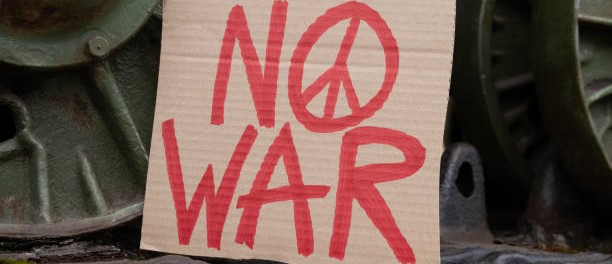
Our answer cannot be and is not abstract pacifism. We do not call simply for peace between ruling classes while workers continue to pay the price. We need an anti-capitalist, anti-nationalist, feminist, ecological and internationalist movement against war.
This means building resistance in workplaces, schools, universities, neighbourhoods and streets. It means opposing NATO and all imperialist military blocs. It means standing against the far right, racism and attacks on migrants. It means defending women, LGBTQ+ people and all oppressed groups against the violence intensified by militarised politics. It means linking anti-war struggles with trade unions, climate movements, feminist movements, youth movements and migrant solidarity networks.
In the coming period, the Left, especially the anticapitalist and Marxist Left need to make the struggle against militarisation a systematic part of our international intervention.
What is required is active participation, wherever possible, in anti-war and anti-NATO initiatives. These mobilisations are important opportunities to transform political analysis into visible, practical, political action.
What is also required is that international anti-war forces, trade unions, socialist organisations, feminist movements, climate justice movements, youth organisations, migrant solidarity networks and all forces resisting imperialism, militarisation, capitalism and authoritarianism to strengthen common struggle. The scale of the threat requires coordination across borders. Against the global machinery of war, we need international solidarity, common campaigns and united action.
It is useful to take initiatives for common political material, public meetings, coordinated actions and international discussions on militarisation. Such work should not only expose military spending, but also explain militarisation as a social process: the cuts imposed on workers, the militarisation of education, compulsory service debates, violence against women and LGBTQ+ people, racism against migrants, the disciplining of youth, authoritarianism and the link between war, fossil capitalism and extractivism.
We need to do everything in our power to help build a systematic international campaign against militarisation, war, fossil capitalism and the social war against the working class. All forces resisting imperialism, militarisation, authoritarianism, fossil capitalism and exploitation ought to join this struggle, to coordinate across borders, and to turn international solidarity into common action from below.
- Against NATO and all imperialist blocs.
- Against militarisation and authoritarianism.
- Against fossil capitalism and extractivism.
- For working-class internationalism.
- For a world without war, occupation and exploitation.
- For a socialist world.