


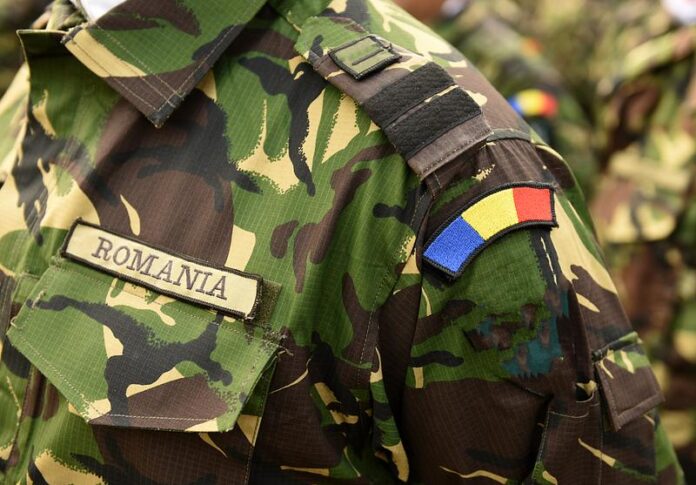
The drones that have sparked so much controversy have fallen on a country that has taken out a 17-billion loan from Brussels to prepare for war. But society—especially the working class—is growing increasingly sceptical.
We talk about the atmosphere in Romania in the days following the crash of the two drones, which has been widely discussed in Italy as well, with Rares, 28, a sound technician at a theater in Bucharest, but also a political activist with the Grupul de Acțiune Socialistă (GAS), a group that describes itself as “revolutionary socialist and internationalist”—composed largely of young people—which in recent years has sought to play an active role in the local anti-war movement.
“The working class in Romania and the region,” wrote the GAS activists in a statement released after the drones were shot down, “could not care less which of the imperialist blocs controls the Black Sea trade routes, the energy corridors, or grain logistics. Rearmament will be financed at the expense of the workers, with loans guaranteed by the promise of their continued exploitation, and they will also be the ones to suffer the effects of the war. We stand in solidarity with the Romanian, Ukrainian, Russian, Bulgarian, and Turkish workers, who share the same interest: putting an end to the war.”
We asked Rares for his assessment of the current situation:
Romania is not just a country that borders Ukraine, which was invaded by Russia, and a country that has been in the news in recent days due to the drones that struck it. It is also the country that, in recent days, has been granted a loan of nearly 17 billion euros by the European Commission—to be repaid over 45 years—under the SAFE agreements for “economic development,” which are in reality funds for modernizing the military and connecting infrastructure. In short, Europe will lend a flood of money to the countries along its eastern border to transform them into a war-ready front, and Romania is the country that, after Poland, will receive the second-largest contribution. This flood of money inevitably impacts the Romanian political debate as well, to the point that not only the government and all political parties, but even the labor unions dare not question the idea of that country becoming a future theatre of war.
- Speaking of drones: how did the Romanian public react?
There were two incidents: the first in Galați, near the border, where a civilian structure was struck for the first time since the war began. There had been similar incidents in the past, but a residential home had never been hit before. The media immediately reported that it was a Russian drone—there was no doubt about it. People reacted with fear, and at the same time, opinions were divided: some truly believed it was the Russians, while others were sceptical, because Romanians are generally distrustful of the government. Many commentators said that the incident proves we need to increase military spending. The far right tried to capitalize on the situation and voted in Parliament against a measure that would have authorized the shooting down of all drones flying over the country. But it wasn’t a serious debate—just a way to convince people that we need more weapons. In the second incident, it was confirmed that the drones were Ukrainian, but officials only stated that they had exploded in the port of Constanța, without offering any further explanation. This explains why there is widespread mistrust here, even toward the media. It’s similar to the reaction we saw during the elections, when the far-right candidate was banned. The prevailing opinion was: “It’s good not to have a right-wing president, but this decision is undemocratic.” Now the official line is that the Ukrainian drones that crashed in the port of Constanța were diverted by the Russians, and people are concluding that the problem isn’t the Russians, but the war itself. And the media respond by saying that it was the Russians who started it.
- Has the attitude of Romanians toward the war changed over time, and if so, how?
My impression is that anti-war sentiment has grown, even though no one is organizing those who are against war. Many people today are asking why we’re sending money to Ukraine and questioning the nature of this war. And among the people I’ve spoken with while campaigning against the war, only a third say they want more weapons to defend against Russia—which is the government’s position. Meanwhile, all Romanian political parties support the SAFE loan.
- What about the attitude of labor unions?
The labor unions generally didn’t take a stance. At one point, some unions began saying that it should be discussed about who will receive the money for the military; they later asked for having access to the documents. This slight shift in approach may seem like a step forward in some ways, but in reality, there has been no real progress, and it masks the fact that most people in the union believe that rearmament is a way for workers to earn a little extra.
- The Ukrainian Ministry of Defence admitted some time ago that there are over 2 million “draft dodgers”. Have you had the chance to meet any of them, and what is the Romanian government’s stance on this?
At the start of the war, there was a great deal of solidarity from Romanians, but reactions have been mixed—just as the phenomenon of people fleeing Ukraine is complex. There are many ordinary people, ordinary workers. Two years ago, I met refugees who were asking for money or for help finding odd jobs. For them, Romania is mainly a transit country on their way to Germany or other Western European countries. Some, however, have stayed here and integrated: the children go to school, and I sometimes meet Ukrainian boys when I go to play sports. Where I live, though, very expensive cars have also been seen, and people realized that those refugees were rich—richer than they were—and reacted more hostilely, accusing the government of caring more about Ukrainian refugees than about them. In general, however, solidarity has prevailed.
- In Italy, there’s a debate on reinstating mandatory military service, and there’s a growing presence of military personnel and police officers in schools and universities. What’s happening in Romania?
Here, too, some have proposed making military service mandatory, but in the end, a plan was passed that calls for more soldiers but on a voluntary basis. There are posters on the streets advertising military academies, capitalizing on the social crisis the country is going through. The message is: by enlisting, you’ll have money to spend, food to eat, and a secure job. As a result, the pressure to enlist is stronger in certain rural areas—once industrial hubs—where unemployment has reached 30% following deindustrialization. Here, they’ve even sent recruitment teams to schools, while in urban areas they’ve rather resorted to influencers. A few months ago, Romania’s president even promised that recruits serving a six-month term would receive 5,000 euros. Austerity measures are also putting pressure on students, who need jobs but are being offered positions that pay less and less; as a result, military service seems to offer better prospects for them as well.
- Earlier you mentioned the people you spoke with while campaigning against the war. What is that about?
We started by taking part in a campaign to drive Elbit Systems out of Romania, and I think that was a good initiative, but we proposed going further by organizing other events as well, such as public discussions. In areas where weapons are manufactured and where Elbit Systems facilities are located, we spoke with the local population: we met with doctors, teachers, construction workers, and tourism workers, and we noticed that among the more educated, the belief that we must defend ourselves is stronger. Construction workers, on the other hand, simply tell you: we don’t want to go to war. Polls also confirm that, following the attacks on Iran, the fear that the war will directly affect Romania is growing. There isn’t yet a firmly established awareness of the issue, but there is a great willingness to discuss it.