

The political situation in the UK is currently very concerning. There is a whole raft of reasons for this, but most significantly the collapse in popular support for the Your Party project alongside the continuing popularity of Reform UK, a far-right populist party.
If one looks at opinion polls since the last general election in July 2024 one can see a rapid change in the fortunes of the main political parties. Both The Conservative Party and Labour Party have fallen in the polls, in the case of Labour, quite dramatically. Labour’s overwhelming victory in the 2024 election was more a vote against the Conservatives than a vote for Labour. Since then, support for Labour has almost halved, from 34.7% to 17.6% and support for The Conservatives fallen from 24.4% to 18.7%. This led to an opening for the right populist Reform UK party, whose support has almost doubled, from 14.7% to 27.7% over the same period. There is evidence from research conducted by Survation that support for Reform came initially from disaffected Conservative voters but is now coming from disaffected Labour voters as well. Over the same period support for the Green Party has grown from 6.9% to 14.9%. Currently all of the parties mentioned above appear to have plateaued in terms of popular support, with slight falls in support for Reform, down 3.4% from a high of 31.1% in January 2026 and the Green Party down 2.5% from a high of 17.4% in March 2026.
In the recent local elections, the new left-wing party “Your Party” stood in a very limited capacity, mainly supporting independent candidates. Your Party didn’t win any council seats and its sitting councillors were not re-elected. There was success for “left” candidates in places where there was a record of existing support. This mostly applied to areas with a high Muslim population, such as Tower Hamlets in London, where Aspire, (an independent local left party) won 32 seats and Newham, also in London, where the Newham Independent Party won 24 seats. Altogether candidates describing themselves as socialist or left won 101 seats.
The unwillingness of the over-centralised leadership of Your Party to build in local areas has bordered on farce. Time and again the leadership has hidden data from its members, prevented branches from forming and stopped local proto-branches (unofficial branches built by local activists) from realising their potential for popular support. Over the summer of 2025 over 800,000 people expressed interest in joining the new party. Today Your Party has fewer than 50,000 members, although data about Your Party is kept under wraps by the self-appointed bureaucrats at the top of the organisation. Communication with members is limited and disingenuous and thousands of members have probably resigned in the recent period.
Activists are networking across dozens of branches and when they do the picture is clear: proto-branch YP meetings are significantly smaller than six months ago and most youth members no-longer attend. Increasing numbers of comrades say they are likely to resign if things don’t change. There are independent left groups within Your Party such as Connections, Campaign for a Mass Worker’s Party and Members Charter. These are groups that are looking towards building a left opposition both within and beyond Your Party. They are hoping to unite those on the left who are still committed to working towards a new left worker’s party. It is clear that the Grassroots Left minority on the Your Party Central Executive Committee (CEC) is waiting for developments and it is encouraging that Sophie Wilson (a CEC member from Yorkshire and Humberside) will be attending an initial conference of activists organised by Connections on 6th June. This conference is attempting to bring together socialists both within and beyond Your Party to plan a way forward for the left. Members Charter is having an on-line meeting on 31st May with the title “What is to be Done – Organising socialists beyond Your Party”. Support for the organisations listed above is modest and numbers attending on-line meetings are in the low tens not the hundreds as was the case previously.
It remains to be seen, what developments will emerge more widely. Reform UK now has control of multiple local authorities. This will mean that their approach to austerity and their reactionary policies will be more visible to the public. Publicly Reform UK concentrates on presenting its candidates as “of the people” and their reactionary policies are simply a magnified version of the policies advocated by the other mainstream parties. It is their social policies that might lead to voters turning away from them as well as their potential incompetence in managing budgets. If Reform begins to promote the needs of the police service above those of schools for example or attempts to prohibit expressions of social solidarity and the rights of minorities, then they could soon reveal themselves as antagonistic to the desires of the majority and lose support. Nigel Farage’s greed over gifts he has received, including a £5 million gift from Christopher Harbourne and the pathological nature of some of the Reform councillors could also prove to limit their popularity.
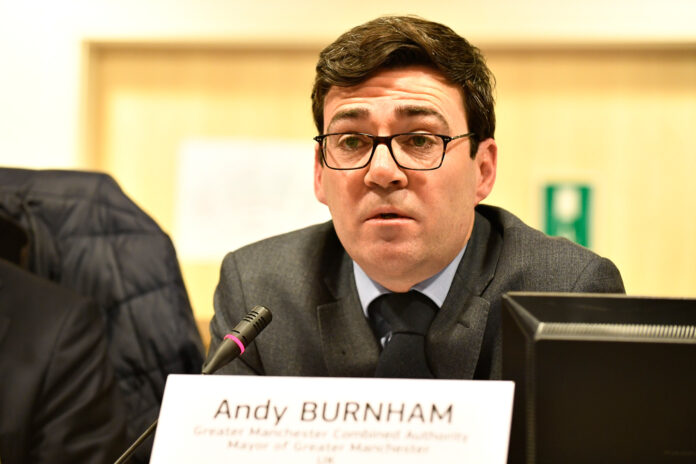
The Labour Party is currently in a crisis. Popular support is low and Prime Minister Keir Starmer is incredibly unpopular with an approval rating of only 23%. There is a move to replace him with Andy Burnham (Mayor of Greater Manchester) but because Burnham is not an MP, he will have to win a by election in Makerfield first. This is likely to take place on June 16th. According to a recent poll, support for Burnham is running ahead of support for Reform and the odds on a Burham victory, where he to stand, are at 67%. Interestingly, if another Labour candidate were to stand the odds for a Labour victory would be at 0%. The Greens have recently decided to run an active campaign against Burnham, rather than advise their voters to vote for Burnham. This reveals their preoccupation with their own electoral success rather than a better way forward for the British people.
If Burnham was elected as leader of the Labour Party based on his promises this would represent a very partial step forward for workers. He has raised the idea of progressive taxation with increased taxes on the rich, an end to austerity policies, public ownership (of previously publicly owned utilities such as water), and the expansion of social housing including a massive council house building programme, integrated transport and regional devolution.
These policies would place him broadly to the left of the Green Party if he saw them through. His record however is not nearly as left as his rhetoric. He was a member of the right-wing Tony Blair lead government and voted for the war in Iraq. As Mayor of Manchester, he has integrated transport networks but left the transport companies in private hands. When last elected he promised to build 10,000 council houses but in fact has delivered only a few hundred. Since he announced his candidacy in Makerfield he has begun to play down his left credentials and is obviously trying to move to the centre ground. On migration, a Burnham source told the Guardian newspaper that Burnham, “must show decisive leadership on this (migration) and reframe, but back reforms to restore control over our borders and create a firm but fair migration system.” There is also little evidence to suggest that Burnham would not back down under corporate pressure, as other Labour leaders and prime ministers have done.
Nevertheless, if Burnham were to become Prime Minister, his soft left image and his charisma and competence would attract some voters who have switched to Reform back to Labour and many who left Labour to join the Green Party or Your Party would rejoin to the Labour Party. The future for the left would remain uncertain.
The Conservative Party is floundering. It is unable to win back those who defected to Reform or build a new base of support. Support for the Liberal Democrats is holding up and they are not losing members.
Meanwhile the threat of the far-right remains. A recent demonstration by the neo-fascist Tommy Robinson attracted a crowd of around 35,000. This is a fraction of the 150,000 he attracted last year and was countered by a much-increased and larger, counter-demonstration. It seems as though support for Robinson’s neo-fascist rhetoric does not sit well with many who may have attended last year’s event and his close association with Elon Musk – a principal sponsor, is not regarded positively by many on the right of British politics.
The trade unions are passive and only really mobilise in support of those opposing the far-right. It seems possible that if Burnham does become Prime Minister, then the UNITE union would review its current relationship with Labour and pressure to disaffiliate from Labour would reduce. It seems likely that most trade unionists would welcome a Burnham victory.
The situation is therefore very fluid but a Burnham victory would probably considerably even further undermine Your Party. People could justifiably point out that many of those close to Jeremy Corbyn are hardly to the left of Burnham and that going back to Labour would produce more certainty than the opaque machinations they have encountered from Your Party. This of course depends on Burnham winning the Makerfield by election, which is by no means certain.
In the meantime, it is important that those on the left keep in touch with those contacts they have made since the Your Party project began. They should continue to improve regional and national connections to assist in the future development of a new left formation based on radical socialist politics. A well-connected collaboration of socialists, intent on building a coherent socialist programme that could impact on British politics in the future is necessary. What is clear is that socialist ideas are back on the agenda and increased clarity about what that means is the next part of the narrative.