

Nigeria’s working class is overwhelmingly informal. Out of a labour force of more than a hundred million, over 80% survive through precarious, unregulated work—street trading, transport, home-based production, waste picking, day labour. This is not a marginal layer; it is the core of the economy. Yet these workers remain largely excluded from labour protections, social security, health insurance, ect.
This situation has sharpened under the current economic crisis—rising inflation, subsidy removals, and currency devaluation have pushed millions further into poverty.
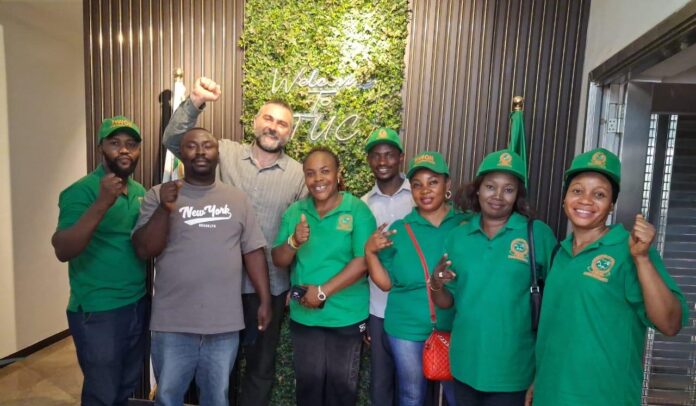
In this context the Federation of Informal Workers’ Organizations of Nigeria has a crucial role to play. FIWON organises some of the most precarious layers of the Nigerian working class—market traders, artisans, transport workers—fighting for recognition, rights, and dignity.
On March 25, FIWON brought its demands directly to the Nigerian parliament, mobilising workers in a rally to demand social protection.
In this interview, we speak to FIWON members Denis, Gift, Victor, Blessing, Sherifat and Gloria who took part in the rally, to understand both the conditions they face and the demands they are raising in struggle.