

This extensive article was written in 2016, three years after Chávez died, and was originally published in Greek. It takes up the experience of the Chávez government in some detail, its strengths, its weaknesses and the challenges that laid ahead. It does not take up the characteristics of the Maduro administration, which took steps back in the proccess initiated by Chavez. All figures are of 2016. Read our alanysis on the current situation in Venezuela here
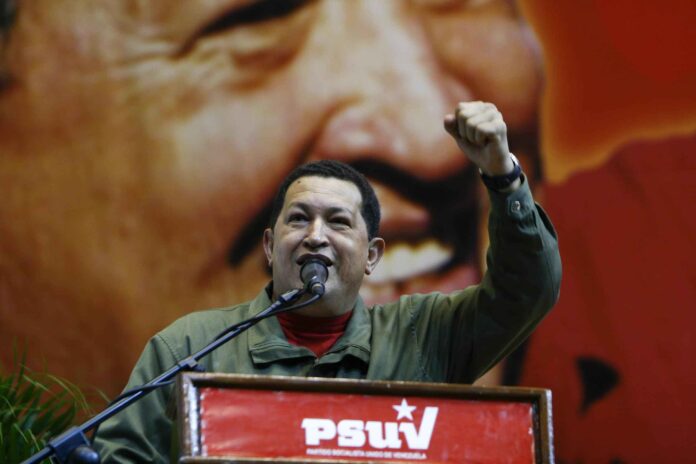
No matter how much they hated him, many Western leaders must have envied Chávez’s funeral. At a time when, in every country of the capitalist world, presidents or prime ministers sweat to secure a second term—and usually end up leaving office disgraced—Chávez managed to be re-elected continuously for 14 years and to die at the peak of his popularity. It is impossible to calculate the exact number, but according to some reports more than 2 million people took part in the funeral events. And it was not merely a funeral; it was a message, expressed through the slogan heard by many: “Capitalists, do not think that the revolution will stop.”
Leaders like Chávez—people who have played an important role in advancing left-wing ideas in practice—do not deserve a dithyrambic, personality-cult obituary. Much more productive for the cause they served is an analytical and sober assessment of their trajectory, from which conclusions can be drawn for the struggles to come.
Because at the very same time that the phenomenon and trajectory of Chávez deserve and require our support, it would be a mistake to overlook the contradictions and limits of Chávez’s path. The fact that Chávez did not have a fully elaborated plan in mind, but moved to the left through an empirical course, simply because he wanted to be close to and alongside the Venezuelan people, has a dual significance. On the one hand, it demonstrated that anyone who wishes to consistently pursue pro-people policies will inevitably have to come into conflict with imperialism and capitalism, and thus—even empirically—move toward increasingly left-wing positions. On the other hand, from the moment there is no comprehensive plan for a break with major capitalist interests, the struggle remains unfinished—and the danger of regression and defeat at a later stage lies in wait.
Let us, however, take things in their proper order.
The role played by Chávez in changing the balance of forces across the whole of Latin America was decisive.
In 1998, when he won his first electoral contest, even the very idea of confronting the United States and neoliberal doctrines appeared insane. It was the end of a decade of complete ideological and material domination by US imperialism. Venezuela was a small country, always dependent on the superpower. Across the entire continent—which US capital had always viewed as its “backyard”—there were right-wing governments, with the sole exception of the mountainous region of Chiapas in Mexico.
Chávez stepped forward and gave expression to the wave of radicalisation within Venezuelan society. And that required courage at the time. In order to achieve even the smallest concessions in favour of the people, he had to come into conflict with the US. Chávez, however, did not “back down,” as many leaders of the Left had done in the past. Despite the weaknesses of the policies he implemented, it must be acknowledged that he maintained a consistent stance to the very end, without “selling out” the movement—and this stance opened up new paths across the continent.
“Dictators Are Drug Addicts!”
Few governments in our era have been slandered as much as the Chávez government in Venezuela. For the US media, it is more or less taken for granted that Chávez was a “dictator” who destroyed the country. Characteristic excerpts of this kind are presented in the Oliver Stone documentary South of the Border, which opens with a clip from an American television programme in which the presenter says:
“Did you know that some of the dictators now… apparently are drug addicts as well? That might explain a few things. Hugo Chávez admitted in a speech that he chews coca… and that he gets it from the dictator of Bolivia…” [1]
On the day of his death, the Associated Press wrote:
“Chavez invested Venezuela’s oil wealth into social programs including state-run food markets, cash benefits for poor families, free health clinics and education programs. But those gains were meager compared with the spectacular construction projects that oil riches spurred in glittering Middle Eastern cities, including the world’s tallest building in Dubai and plans for branches of the Louvre and Guggenheim museums in Abu Dhabi.”
The ferocious efforts of the international media to discredit every voice opposed to capitalism are, of course, well known. The most intense assault, however, came from the domestic media, which in their vast majority are owned by the economic elite. Not only did they constantly engage in propaganda against the government, but they went so far as to stage, through selective editing, a provocation against government supporters—showing them firing weapons as if they were shooting into the crowd of opposition demonstrators, when in reality they were responding to fire from snipers. This provocation became the media foundation for the 2002 coup [for more on this watch the documentaries “The revolution will not be televised” by Kim Bartley- Donnacha Ó Briain, 2003 and “Venezuela Bolivariana People and Struggle of the Fourth World War” by Marcelo Andrade Arreaz, 2004].
It was perhaps the first time that the media played such an active role in a coup d’état. Everything was staged to such an extent that even the generals’ televised statement announcing the overthrow of the government and referring to deaths had been recorded two hours before the clashes even broke out!
The Venezuelan bourgeoisie, of course, did not confine itself to propaganda alone. It carried out its threats by organising a military coup, as well as the infamous lockout (an employers’ strike) in the oil industry a few months later. The most significant damage, however, came from the ongoing economic sabotage carried out by capitalists against the economy, with the aim of undermining the government both economically and politically.
Thus, in a climate of open confrontation with capital and its agents, both inside and outside the country, Venezuelan workers managed to weaken the role of US imperialism in the region and to place back on the agenda words that had become worn out and emptied of meaning in the 1990s, such as “socialism” and “nationalisations.” Above all, they demonstrated that following the dictates of the powerful is not a one-way street—that another path exists, with policies different from the neoliberal “Washington Consensus.”
In a World of Cuts, Some Are Able to Give
How did this happen? How was a small country able to withstand all this pressure and survive? What policies did the government and Chávez pursue?
Sometimes the figures speak for themselves.
From 1998, when the MVR (Movement for the Fifth Republic, Chávez’s party at the time) won elections for the first time, there were very significant changes in the country’s social conditions.
Living standards: Venezuela is currently the country with the lowest level of inequality in the whole of Latin America, according to the UN. The figures on poverty are also revealing: poverty was reduced by roughly half in a decade, from 50.5% of the population in 1998 to 26% by the end of 2008, while extreme poverty fell from 23.4% in 1999 to 8.5% in 2011. GDP per capita more than doubled during the Chávez period, while unemployment was reduced by approximately half.
Health: Health expenditure increased from 3.9% of GDP in 1997 to 4.9% in 2010. The percentage increase may appear modest, but it should be borne in mind that during the same period, in the vast majority of countries, spending was reduced. Infant mortality fell from 20 per 1,000 to 12 per 1,000.
Education: According to UNESCO data, Venezuela has one of the lowest illiteracy rates in the region, has made progress of 7.5% in the EDI index (a measure of the overall educational level of the population), and has increased school access by 6% (with even greater increases among the poorest layers of the population).
Thus, a pariah country, in conflict with imperialism and starting from a very low base, managed to achieve this improvement over 15 years. All this took place during a period when, in almost all countries, there were massive cuts to wages and rights, with the well-known consequences for living standards. This alone demonstrates the potential for implementing a different policy.
However, the most popular social policy programmes of Chávez were the Misiones (“Missions”). The best known of these was Barrio Adentro (“Inside the Neighbourhood”), which involved the creation of clinics within poor communities, staffed by doctors from Cuba. Other programmes included the mass construction of working-class housing, educational missions to combat illiteracy, as well as collective training programmes aimed at improving living standards (such as “seminars” for urban residents on the operation and improvement of plumbing systems, “seminars” for members of cooperatives to increase crop yields, etc.).
The Trajectory
Because political decisions do not fall from the sky, we need to look at the course of events from a historical perspective to understand the outcome.
Venezuela is a a medium-sized country of 30 million people. It gained independence from the Spanish Empire in 1821. It never developed significant industry, so until the discovery of oil reserves it was an “unknown” country, without particular geostrategic importance for the imperialists. From 1945 to the present, it has maintained a parliamentary democracy, with some intervening coups. The drop in oil prices in the 1980s—and especially in the 1990s—threw the country into economic crisis and political unrest.
As in many other countries in the region (and beyond), the bourgeois politician Carlos Andrés Pérez, immediately after his re-election in 1989, announced the “package”: a series of austerity measures dictated by the IMF. The harshest of these were price increases on basic goods, transportation, gasoline, and so on.
In February 1989, the population took to the streets en masse, in an uprising against the government. The army and police responded with gunfire, and the number of casualties is estimated at 3,000. Pérez declared a state of emergency in order to suppress the protests.
This uprising radicalized large segments of the population, as well as parts of the army unwilling to turn against the people. Thus, in 1992, a group of military officers, led by Chávez, attempted a coup to overthrow the government and establish a pro-people regime. The coup failed, and Chávez agreed to surrender on the condition that he be allowed to make a statement. In this statement, he said: “For now, lamentably, the objectives we considered were not achieved in the capital.” Large portions of the popular classes saw in Chávez a hope for the future. Two years later, amid widespread disillusionment with the country’s political system, Chávez was released due to his immense popularity and founded the MVR.
The MVR won the 1998 elections, and in 1999 a referendum was held for the country’s new constitution—a progressive constitution that established the “Bolivarian Republic of Venezuela.”
Chávez’s Policies in the Early Period of His Government
Chávez’s policies during the first period of his government were left-leaning compared to the standards of the time, but relatively moderate in relation to the country’s needs. The crises of the 1980s and 1990s had left society fragmented. Chávez sought to rely on the revenues of the state-owned PdVSA (Venezuelan Oil Company) to organise social policy programmes. The best-known programme of this early period was the Plan Bolívar 2000, which mobilised the army to participate in road construction, vaccination campaigns, and similar initiatives.
At the time, Chávez invited investors from Wall Street to come to Venezuela, retained the finance minister of the previous president, Caldera, in office, and appointed a “successful businessman” to head PdVSA. His first attempt, then, was to create a model of capitalism without neoliberalism.
Moreover, the choice of Simón Bolívar as the symbol of the process reflected its characteristics. Bolívar was the leader of the struggle for independence from the Spanish Empire and aimed to establish a progressive bourgeois democracy in Latin America. Bolívar drew inspiration from the ideas of the French and American revolutions—i.e., from the ideas of the first phase of capitalism, when its progressive features dominated the struggle against feudalism.
This period began to approach its end when Chávez attempted measures that went beyond simply redistributing budget surpluses, and implied structural changes in the way the economy functioned.
The escalation of the conflict with the bourgeoisie and the opposition began in November 2001, with a package of 49 laws introduced by Chávez. These laws included bills that were a red flag for capitalists. The sharpest among them were:
- The Land Law, which allowed the expropriation of unused land.
- The Hydrocarbons Law, which required higher state participation in PdVSA’s partnerships with foreign companies.
In April 2002, a staged coup was attempted, in which Carmona, an industrialist and head of the opposition alliance, was sworn in as president. From the first hours, the coup received informal support from the IMF and the United States.
However, the popular support for the government quickly became evident. Large numbers of people took to the streets, demanding Chávez’s return. Sections of the army joined the crowd, which ultimately retook the presidential palace, Miraflores, with the help of the presidential guard. (A secondary but revealing factor influencing the presidential guard’s stance was that Carmona and the others, upon entering the palace, began celebrating by opening champagne and whiskey, which enraged the soldiers.)
Chávez was ultimately rescued by a group of paratroopers, who brought him back from his temporary exile and returned him to the capital.
Unfortunately, he had not yet drawn the necessary conclusions. In his speech immediately afterwards, he called for “national unity” and attempted conciliatory moves toward the opposition. At this stage, many parallels can be drawn with Allende’s stance in Chile.
On the other hand, the opposition’s defeat did not lead it to a similarly conciliatory position, but rather to preparations for a new offensive. This came in the form of the lockout in PdVSA, accompanied by severe economic sabotage.
This “strike” lasted from December 2002 through January 2003 and had catastrophic consequences for the economy. Oil production—which accounts for roughly 80% of exports, 50% of state revenues, and one-third of GDP—came to a halt. This plunged the entire economy into recession and caused paralysis, as there was no fuel to move anything, not even to transport goods.
To topple the government, the circles of capital and the Right-wing employed every dirty tactic available. To block the possibility of restarting the oil industry facilities, the American company SAIC—closely linked to the US Departments of Interior and Defense—which had been contracted to install PdVSA’s management software, created a blackout in the system, using modems secretly embedded in the facility walls.
The results of this sabotage were devastating: a 25% drop in GDP (around $20 billion in economic losses) and a sharp surge in unemployment. This destruction was organised by the very people who, at every strike or every disruption, protest about the “damage to the economy.”
The reactionary forces of the country worked together to realize this aggressive move. Fedecámaras (the equivalent of a national employers’ federation), the CTV (the Confederation of Labor Unions, dominated by corrupt and “yellow” unions), the establishment parties, and reactionary military officers formed the “Democratic Coordination for Citizen Action,” with the support of the media and US intelligence agencies.
The Critical Moment
This double blow further radicalized the population and made it clear that the bourgeoisie was not willing to compromise or “cooperate” with the government. 2003 was the most critical period for the revolutionary process in Venezuela. All the conditions for the overthrow of capitalism were present: after two attempts to topple the regime, the bourgeoisie was backed into a corner. Workers and the popular masses had experienced their own strength by preventing the coup, and they were pressing Chávez to advance pro-people reforms. The middle classes were divided, with some turning left to support the government, while the segment backing the opposition was demoralized by repeated defeats.
At that moment, Chávez had all the power and political authority to proceed with the expropriation of the properties of capitalists involved in attempts to overthrow the government, to carry out mass nationalisations of key sectors of the economy, and to organise institutions of popular participation in such a way that they would have genuine decision-making power. Had all of this been implemented, it would have been entirely feasible to speak of the end of capitalism in the country. Such a development would, in turn, have further intensified contradictions in the rest of the region.
Unfortunately, Chávez lacked this understanding and perspective, and at the same time there was no other political force in the country to put the issue of system overthrow on the agenda with a concrete plan, proposing specific measures to take economic power from the bourgeoisie and transfer it to the workers. This limitation, at a moment when the revolutionary process was at its peak, permeates the history of Venezuela ever since.
Even without such a plan, Chávez, after the lockout, began to move empirically to the left. It became increasingly clear that in order to maintain the social policy programmes, he would have to confront capital, at least to some degree.
The implementation of the Land and Hydrocarbons laws, the nationalisation of specific industrial units, and even supermarket chains occurred in the period after 2003. During this period, Chávez also began to shift politically to the left: he frequently referenced socialism, and declared himself a supporter of Trotsky’s ideas and the theory of “Permanent Revolution.”
Petrodollars and the Petrobolívar
Most bourgeois analysts “explain” the Venezuelan “phenomenon” by claiming that Chávez managed to implement social policies using oil money. There is certainly some truth to this, but it is not the end of the story.
Venezuela is currently the world’s fifth-largest oil-producing country and has the largest untapped crude oil reserves globally in the Orinoco belt.
The surge in oil prices—from around $20 per barrel in the late 1990s to nearly $100 per barrel toward the end of the 2000s—obviously generated huge revenues for all oil-producing countries. Yet, to give just two examples, this did not automatically translate into improved living standards for the population: in Nigeria and Saudi Arabia, poverty increased during the same period.
Contrary to widespread perception, it was not Chávez who nationalised PdVSA, the state-owned oil company. PdVSA had been state-owned since its founding in 1976. However, in the 1990s, under the neoliberal “mania” and thanks to rising oil prices, PdVSA began a policy of joint ventures with major international oil companies (Chevron, BP, Total, Repsol-YPF, etc.) to exploit reserves. This policy deprived the state of enormous revenues, as the government’s share for each barrel extracted by a private company was 16.6% of its final price, and often—“to provide incentives”—it did not exceed 1%!
The Hydrocarbons Law introduced by Chávez required greater state participation in joint ventures with private companies and imposed a higher percentage of state revenue per barrel, set at 30%.
If a multinational refused to comply with the new legal framework, its facilities were nationalised (with compensation). This was the case with Exxon, which, after refusing to comply and having its facilities nationalised, initiated legal action seeking $12 billion from the Venezuelan government (for losses from future use of the reserves, etc.). The case was heard at the International Chamber of Commerce (ICC), which ruled that the government had to pay Exxon $255 million. This amount was not only far less than the $12 billion demanded by the company, but also smaller than the $1 billion the government had offered in an out-of-court settlement.
This episode, along with a series of similar nationalisations in Venezuela, Bolivia, and Argentina, is highly instructive and answers all those who panic at the mere mention of the word “nationalisation.” Multinational corporations and the “international markets” can scream as much as they like, but in practice there is very little they can do when a government decides to nationalise strategically important companies. The legal aspect—or the “legal consequences”—of such a process should be the least of our concerns. There is no legal way to “punish” a state; there is, of course, an economic way to do so—that is, the attempt by capital whose interests are affected to carry out economic sabotage in the country. Whether this attempt succeeds, however, depends on the balance of class forces within the country and internationally: the extent to which the government’s policies have popular support, the mood among workers in the country where the multinational is based, alliances with neighbouring governments, and so on.
The greater challenge is not the process of nationalisation itself, but how the nationalised enterprises can actually serve society. In the case of Venezuela’s oil industry, the challenge is clear: most of the country’s reserves are heavy crude, which is difficult to refine. Multinational companies, with their enormous profits over the years, have had the capacity to invest in research and technology development, making this processing profitable. Venezuela has not yet reached this level of technological development.
The same is true for other sectors, where multinationals can use their scale and planning capabilities to produce cheaper and higher-quality goods than small-scale local industries. To the extent that a nationalised industry produces at higher cost (due to outdated technology) and lower quality, sooner or later it will lose market share to private competitors.
The strategy of the “parallel economy” and its limits
In order to address the technical and political difficulties of nationalization and productive organization, Chávez chose the policy of a “parallel economy.” Instead of pursuing the mass takeover and expropriation of large private capital, he promoted parallel structures of collective or state ownership:
- Land and agricultural production:
- Large land estates (“latifundia”) remained in private hands, while small farmers were supported through cooperatives and funding.
- The Land Law allowed expropriation only if the land was uncultivated.
- The result was that many small agricultural cooperatives could cover basic needs, increasing the production of fruits and other essential crops.
- However, the production of goods requiring mechanized equipment, such as sugar, as well as livestock farming, declined.
- Large land estates (“latifundia”) remained in private hands, while small farmers were supported through cooperatives and funding.
- Consumer goods and supermarkets:
- Some small chains were nationalized, and state-run stores were created.
- The large food market remained mostly under the control of private groups like Polar, which, thanks to their size and vertical integration, could supply products at low prices and consistently.
- State-run supermarkets were not fully equipped or adequately stocked.
- Some small chains were nationalized, and state-run stores were created.
- Banking sector:
- The government began nationalizing banks mainly after the 2008 crisis, when banks were on the verge of bankruptcy due to “bad investments.”
- Nationalizations were accompanied by compensation, often high (e.g., Santander was purchased for $1.05 billion).
- This burdened state finances, while private banks continued to profit from government bonds due to high interest rates.
- One of the main reasons public debt increased from 26.3% of GDP in 2009 to 45.5% today is the maintenance of this model.
- The government began nationalizing banks mainly after the 2008 crisis, when banks were on the verge of bankruptcy due to “bad investments.”
Overall, after 15 years of Chávez’s government, 71% of production remains in private hands. For comparison, at the end of PASOK’s first four-year term in Greece, over 50% of the economy was state-owned, while in Portugal after the 1974 revolution, 80% of the economy had passed into public ownership.
Conclusion: The strategy of the “parallel economy” allowed for the development of social programs without direct confrontation with all private capital, but at the same time it limited the possibilities of a full shift of the economy toward a socialist orientation, leaving large parts of production in private hands and creating productive and distributional gaps.
The contradictions of the Venezuelan model
The contradictions of Venezuela’s economic model become particularly clear in the “price war” that has raged in the country since 2002. The majority of foreign trade is controlled by private capital, as is the distribution system for goods. As in any country, these companies seek to maximize profits, and to achieve this, they overprice their products. Naturally, this lowers the population’s standard of living.
In response, Chávez imposed price controls on basic goods. The logic was that there exists a “fair price,” accessible to consumers and allowing for a reasonable profit margin. At the same time, state-run supermarket chains were opened to offer products at low prices.
The response from private capital was to stop producing goods they considered insufficiently profitable. This led to shortages of even basic items on supermarket shelves, including milk, flour, sugar, and toilet paper. These shortages are not rare; they occur frequently, forcing citizens to stand in long lines for hours just to obtain daily necessities.
The problem affects not only private supermarkets but also public ones, since they too cannot be adequately stocked when the production of goods remains in private capitalist hands.
This situation highlights the utopian nature of the attempt to “regulate” capital by limiting profits, and the unsustainability of the notion of a “fair price.” As long as there are markets or sectors offering higher profits, capital naturally gravitates toward them. To the extent that a leftist government does not nationalize production, it is forced to tolerate this behavior. For capital, there is no “fair profit margin.” The essence of capital is to pursue the maximum possible profit, and this is the foundation of how the capitalist system functions, no matter how “regulated” it may be.
In Venezuela, shortages of basic goods are used to reduce support for the government. In this way, capital offloads its anti-social behavior onto the state, achieving an ideological victory. They present the shortages as a failure of government intervention in prices, argue that the state should not interfere in market affairs, and use the real hardships experienced by ordinary people as an argument in favor of the “free market.”
This situation has an additional negative consequence: the rise in imports, which puts pressure on the country’s currency and drives repeated devaluations. The five devaluations that have taken place over the last decade are indicative of the economy’s underlying problems. The most recent occurred in February 2013, in an attempt to curb the “black market” for currency on the streets of Caracas. The stated purpose of these devaluations is to increase the economy’s competitiveness by making exports cheaper.
However, a devalued currency alone is not a solution in capitalism; there must be industrial production and the creation of goods that can compete in a global market. The existence of a “national” monetary policy in the hands of a leftist government, by itself, did not solve any fundamental problems in Venezuela’s case.
Devaluations cannot fix the core problem of an economy: competitiveness. According to the World Economic Forum, Venezuela ranks 124th globally, below many African countries, and its trend is downward. As long as products produced in Venezuela are more expensive than those from other capitalist countries, pressure for imports inevitably arises, which in turn further undermines the country’s productive base.
The petrodollars flowing into the country massively “hide” this fact. But if it is not addressed—and given that sooner or later oil prices will fall—cheap “Western” products could act like a Trojan horse, capable of undermining Venezuela’s project from within.
Popular Participation
The Achilles’ heel of the process in Venezuela is the limited involvement of workers and, more broadly, of the popular classes in the control and management of public affairs.
Venezuela was a country without significant traditions of the labor movement or the Left, in contrast to countries like Bolivia and Argentina. Notably, the first labor confederation was established in 1936 and the Communist Party in 1931. There were no major labor struggles, unions were small and often tied to employers, and the Left had never clearly left its mark on political developments.
Chávez’s electoral victory relied on a wave of popular anger and participation. The rallies he organized at various stages were among the largest in the country’s history. During his first term, Chávez organized the “Bolivarian Circles,” discussion groups and cultural/political action units intended to support the government. At one stage, these groups gained a certain level of mass participation, but because they lacked a clear purpose, their activity eventually waned.
After attempts to overthrow the government, Chávez announced his intention to create a “revolutionary party” by unifying all parties supporting the government. This effort led to the founding of the PSUV (United Socialist Party of Venezuela), which rapidly grew in size—at one point reaching 5.7 million members—but its internal life never developed meaningful substance.
The core problem was and remains the dual nature of this party, and of the “Bolivarian” regime in general. This duality reflects the existence of two social forces supporting “Chavismo.” On one hand, the oppressed popular layers, whose lives have significantly improved, have been politicized by the process and have supported the government in every critical moment with mass participation and determination.
On the other hand, there is the new bureaucracy that has formed: the so-called Boligarchs, or Boli-bourgeoisie, a social layer made up of corrupt officials within the state apparatus, as well as those members of the bourgeoisie who, after the lock-out, concluded that “since we cannot remove Chávez, we must cooperate with him” (a stance currently supported by the U.S., especially after Obama’s election in 2008).
Thus, the PSUV was largely “taken over” by a bureaucratic layer, which, for example, brought in “bussed-in” voters during elections to secure seats for its own representatives, blocking any critical voices and open discussion. Corruption remains at high levels within the state apparatus, undermining the productive efforts of the government (e.g., the discovery of rotting shipments intended for state-run supermarket chains at the ports) and opposing progressive initiatives (in many cases, local authorities resist implementing decisions on nationalizations or worker control). A bureaucracy has also developed within the labor movement, tied to the Bolivarian bourgeoisie, which attempts to halt any labor struggles (e.g., over collective bargaining) by using the threat that “anyone against the government is siding with the imperialists.”
This contradiction within Chavismo does not merely confuse the populace; it constitutes a mortal danger for the future. First, it provides the opposition with grounds to accuse the government of corruption and, in this way, attract middle-class support on the basis of “protecting individual rights.” Second, it prevents the full advantages of the new model from becoming apparent. As history has shown, a large public sector without democratic planning, worker control, and worker management inevitably leads to dysfunction, bureaucratization, and corruption. This is then exploited by the capitalist class to tarnish the process, denounce the public sector as a whole, and create the environment for privatization policies.
The problem, however, is not limited to the bureaucrats but concerns the government’s overall approach. Its guiding logic has always been “with the support of the people, for the people.” However, the process never advanced to the point where the people themselves would implement the new model. In other words, there was no real trust in the creative capacities of workers and the popular classes when they were given the genuine ability to decide their own fate.
This is not to say that no “popular participation” institutions were created (community councils, cooperatives, Bolivarian circles, missions, etc.). All of these, however, addressed specific, local issues in which people were asked to find solutions within a defined framework. None of these bodies were called upon to take part or have a substantive role in major, central matters. Consequently, the logic emerged that “the experts handle the essential issues, and the people support and follow.” Indicative of this mindset is the fact that worker control over nationalized enterprises was never consciously promoted, even when some segments of workers demanded it through struggles (e.g., at the Sidor steel plant and the public electricity company).
These contradictions, although obvious to the country’s inhabitants, are at the same time partially masked by oil revenues, which have so far acted as a lubricant, softening some of the problems. However, as the international crisis intensifies, different factions within the government will emerge. Which tendency will prevail remains an open question. It depends on the depth of the international crisis, the extent of struggles within the country, the firmness of the opposition (i.e., whether it adopts an aggressive strategy, threatening social gains and risking social explosion against it, or continues its policy of wearing down the government through economic and media sabotage), and so on.
A Crack Toward the Future
For a socialist model to function, it must start from the level reached by the previous capitalist system, but change those structural elements that make capitalist enterprises “antisocial.” In Venezuela, there was no implementation of a “communist” model, as international media claim, but rather a “third way” toward socialism.
This path included significant progressive achievements such as social policies to reduce inequality, nationalizations, and institutions of popular participation, among others. It also had notable international effects, which are not analyzed in detail in this text, such as undermining U.S. ambitions to establish a “free trade” zone under American dominance, the so-called FTAA (Free Trade Area of the Americas). In contrast to this plan, from 2004 onwards, the ALBA (Bolivarian Alliance of the Peoples of Our America) was promoted, an economic cooperation framework on more progressive terms. Starting from Cuba and Venezuela, ALBA now includes eight countries. At the same time, it facilitated the leftward shift in countries such as Bolivia and Ecuador, as well as in nations with more moderate governments, like Argentina and Brazil—events indicative of the possibility of challenging imperialist “one-way streets” even at the level of international relations. Perhaps most importantly, it reopened the global debate about whether there is an alternative to capitalism and what socialism should look like in our era.
To preserve and complete these progressive reforms, and to prevent the return of a harsh neoliberal regime, the Venezuelan movement must take the next step.
This step is the removal of power from the hands of big capital. You can have the government, the army, and the people on your side. But as long as economic power remains in the hands of the capitalists, every achievement is temporary. As shown above, despite the progressive steps taken, the bourgeoisie can still influence events and create faits accomplis.
In conclusion, a massive program of nationalizations of the country’s productive base is needed to stop economic sabotage and product shortages. For the country to break free from the “Dutch disease” (the dependence of a country’s economy on a single export product), it must implement a democratically planned production system, with serious emphasis on the development of industry.
For this to be effective, the immediate involvement of workers and local communities in the control and management of production is required, in order to prevent bureaucracy and corruption. To improve the functioning of the economy and avoid waste, the state could create an agency for each production sector (construction, trade, food processing, etc.), which would significantly reduce costs.
We should not, of course, entertain the illusion that such measures can be implemented without conflict with the capitalists.
If such measures are taken, they will undoubtedly spark a new wave of radicalization throughout Central and South America. For those who say this is madness and impossible, it should be remembered that the exact same claims were made in 1998, and yet that “madness” took shape and shook the entire continent!
The international dimension, through the spread of similar upheavals, is of critical importance. If Venezuela becomes isolated internationally, imperialism will eventually find economic or military ways to strangle it. That is why the exchange of experiences and joint struggles at the international level is so crucial.
In Venezuela, a crack toward the future has opened. It is the duty of all of us not to let it close, and to fight to widen it.
[1] Chewing coca leaves is part of the traditions of the indigenous people of the Andean region. Coca leaves act as a mild stimulant, which helps the indigenous people cope with the harsh conditions of high altitudes.