

Hazal Battaloğlu
A report by comrade Hazal Battaloğlu, vividly describing the feelings of the activists who carried on their shoulders the setting up of the very successful People’s Climate Summit, in Antalya, Turkey, November 14 to November 18.
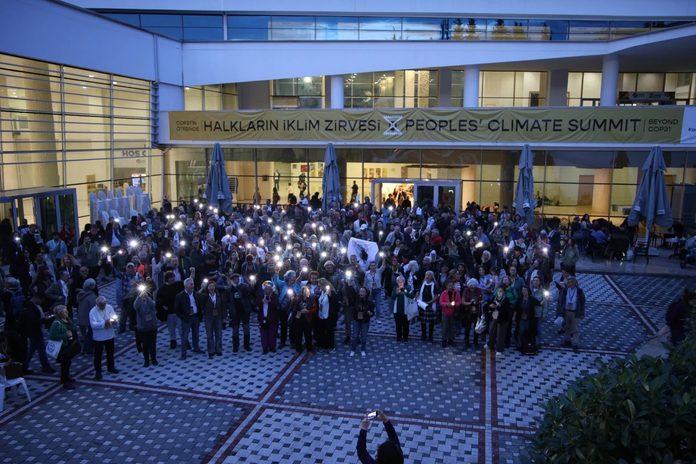
What remains from Antalya after the People’s Climate Summit: marching in the rain, the cooking pots of a cemevi, solidarity stretching from Lefke to Giresun, and a traditional halay dance in the courtyard. The sea turtle puppets filled the street.
***
After a demonstration, the first question is always the same: How many were we? On 14 November in Antalya, thousands of us marched from Aydın Kanza Park to Cumhuriyet Square in the light rain. A drum was playing. A red tambourine could be seen in the crowd, and puppets floated above people’s heads. There were banners from trade unions, Palestine solidarity groups and those who have been defending their water and land for years. We recognised some of the banners from other cities and other demonstrations. Yakutat Mukhtar from Western Sahara was also marching with us. We met some people again that day and stood alongside others for the first time.
Before reaching that square, we had asked ourselves countless times, “Can we really pull this off?” Some people hadn’t given us much of a chance. To be fair, on certain evenings during the preparations, we weren’t giving ourselves much more of a chance than they were. You should ask my dear Burcu how those months went by. I remember calling her at four in the morning to ask, “Burcu, which hotel was this person staying at?” To me, it was the most urgent question in the world. To Burcu, it was four in the morning. She put up with a great deal from us before we even reached Antalya and continued looking after us throughout the summit. I’m surprised she still hasn’t blocked me. I’m so glad you were there, Burcu.
The day after the march, extra chairs had to be brought into the largest hall for the session on the rights of nature, which also featured Markus Wissen from Germany and Tomo Iwabuchi from Japan. There was no room left. We had spent months thinking about everything that could possibly go wrong. This was the summit’s first delightful mishap.
***
COP31 was taking place in the same city. At the People’s Climate Summit, we were discussing what it means for a stream to have rights and who gets to decide the future of a forest. Hulusi Bilgin from Giresun explained how his hometown had been transformed from a hazelnut-growing region into a mining region. What appears as an “investment” in a company’s annual report sometimes means never being able to see your homeland as it once was. Those defending their land are immediately asked, “But where will people work?” As though villagers had only started worrying about their livelihoods on the very day they decided to oppose a mine.
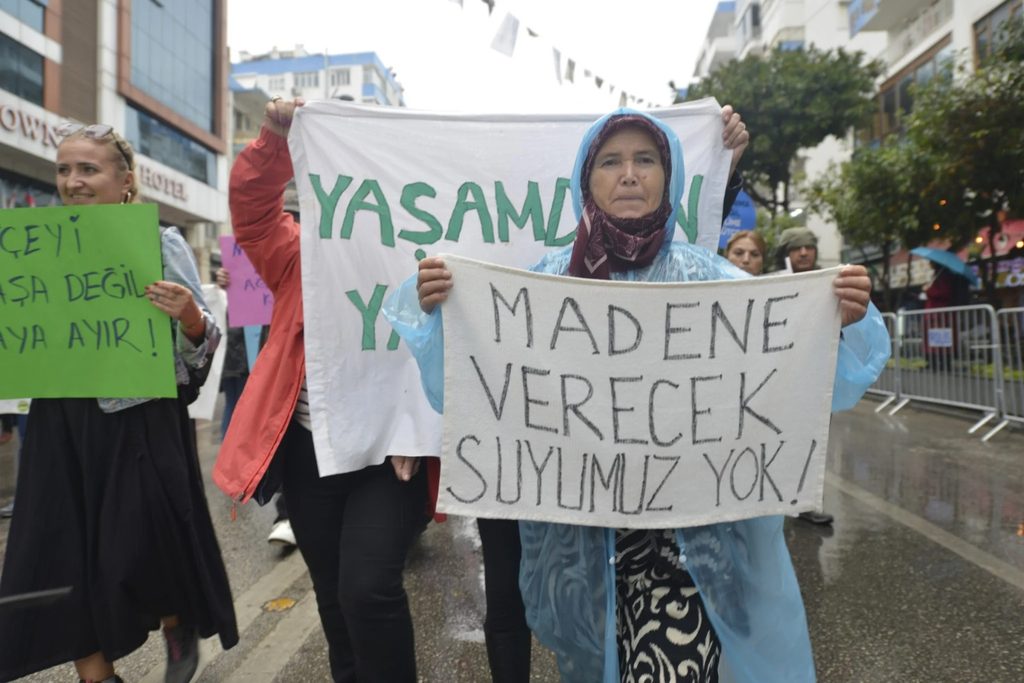
My trade union instincts prompt me to ask a question too. If the mine closes, what will the workers do the following morning? Who will guarantee their livelihoods? For employers, turning workers’ livelihoods into a threat against those defending their village’s water is a rather convenient strategy. I believe the role of trade unions is to disrupt that convenience. While defending wages, they must also have a say in what is produced in the workplace, how it is produced and for whom. When the shift ends, the worker returns home to the very same place through which that water flows.
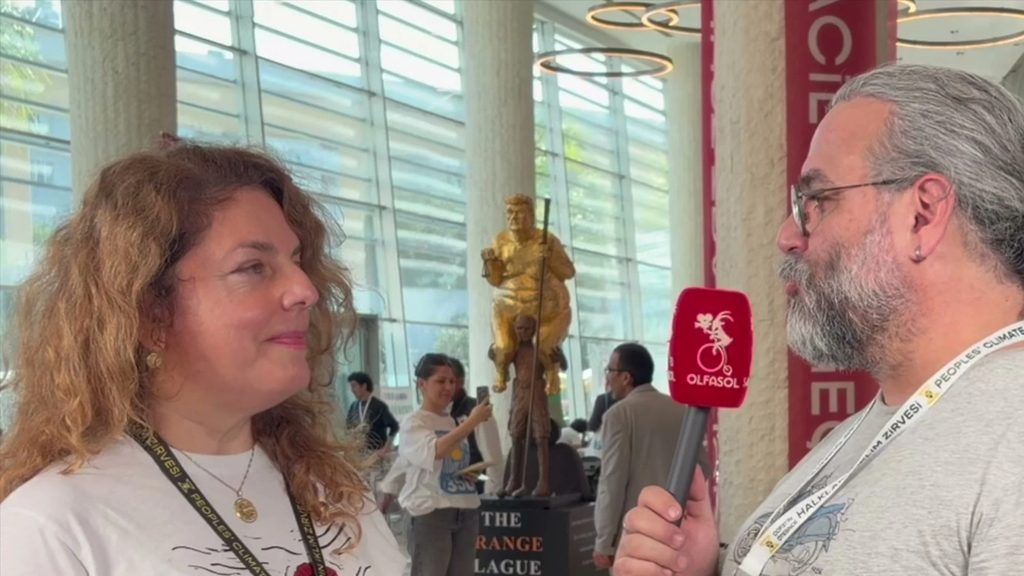
Rüyam Öztuna from Cyprus told Solfasol about another example of shifting the costs of mining onto others. A proposal had actually been raised to transport mining waste from Lefke in the north of the island to another village, Katydata, in the south. What problem is solved by transferring one village’s suffering to another? In 2019, Turkish Cypriots and Greek Cypriots demonstrated together against cyanide in Lefke. Rüyam also recalled how two warships had come face to face during fossil gas exploration. States lay claim to what lies beneath the sea. Nobody asks the people living along the coast what they want.
***
Alongside Rüyam, comrades from Internationalist Standpoint from both sides of Cyprus, Greece, Turkey, Romania and Germany were also in Antalya. They had come to exchange experiences on climate policies that serve working people’s interests. I was particularly happy to have them there. Before a company starts operating in another country, it knows whose door to knock on. We, too, can learn what that company has done elsewhere before our turn comes. The experience of those organising against cyanide in Lefke can be useful to us in Giresun. And when a call for solidarity comes from Lefke tomorrow, knowing who will respond to it here is also our responsibility. For me, this is part of what internationalism means.
Rüyam’s account of Cyprus also helps explain why peace was being discussed at a climate summit. Celine Isimbi from the Palestine Climate Strategy Institute said that there could be no climate justice without the liberation of Palestine. In the same session, Hala Kilani from Lebanon spoke about the devastation war had left in villages, while Eduardo Giessen from Chile explained how the far right was organising in Latin America. When discussing climate justice, we were also discussing who gets to remain on their land, who is displaced and who makes those decisions.
***
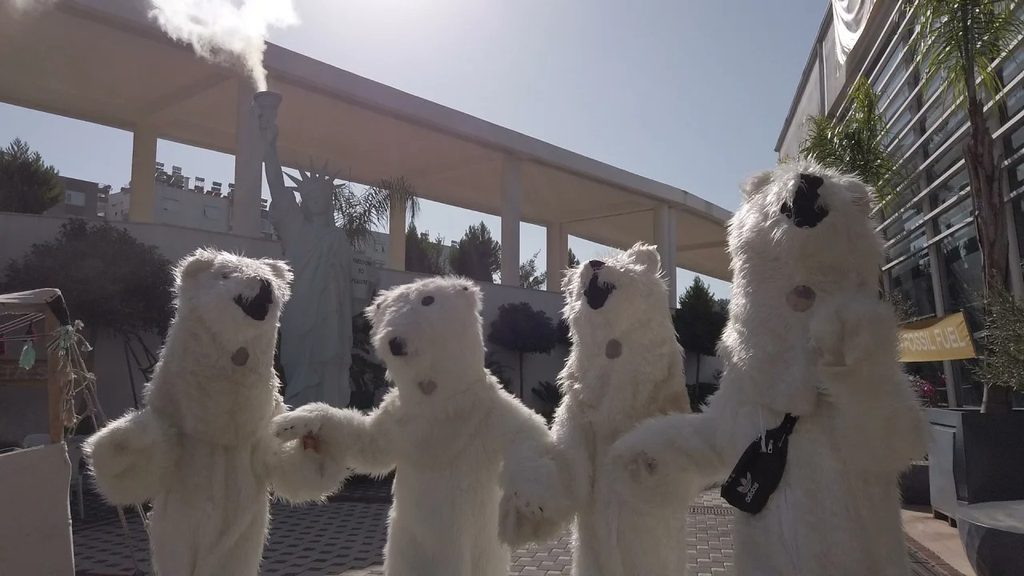
The Statue of Liberty brought by the Danish activists was called “The Freedom to Pollute”. Ever since I heard its name, one question has stayed with me: whose freedom, and who gets the pollution? Flora Vano from Vanuatu challenged the imposition of further debt on her country while sea levels were rising. Afyan from Indonesia spoke about the loss of forests, and Elizabeth Vargas from Bolivia described the climate struggle in her country. The South Asian delegation included Shaktiman Ghosh, a representative of street vendors from India; Badrul Alam from a farmers’ organisation in Bangladesh; Irum Fatima from Pakistan; and Reshma Shakya from Nepal. When floods strike or goods spoil because of extreme heat, the distance between earning a living from the land and earning a living from a street stall becomes considerably shorter.
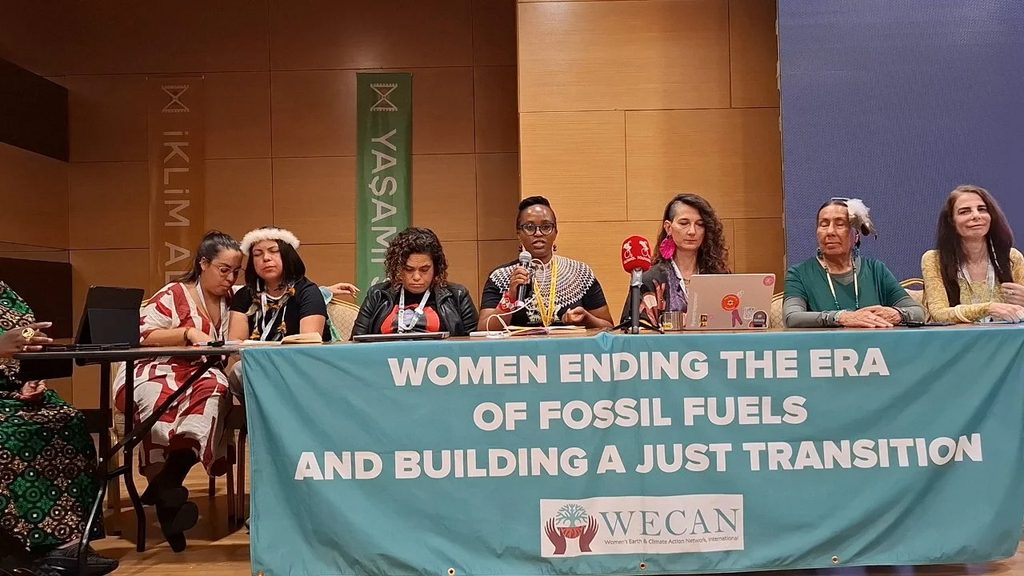
At the panel bringing women together, we heard from Lucimara Patté of the Xokleng people in Brazil, Sostine Namanya from Uganda, Larissa Baldwin-Roberts from Australia, Jacqueline Patterson from the United States and Casey Camp-Horinek from the Ponca Nation. They discussed who decides how the energy transition takes place, whose land is mined and who pays the price. Again and again, the question of water came before us. When the Colombian participants sang a song for water, the audience joined in the chorus.
***
Throughout the summit, a cemevi, an Alevi communal place of worship and gathering, provided large pots of vegan food. While we were moving from one session to another, someone was thinking about our next meal. If we had so much time to discuss the future of the world, it was partly because someone was standing over those cooking pots.
Seeing the food reminded me of Auntie Çiçek from Dersim. Whenever she made a religious vow, she would not shed an animal’s blood. Instead, she would set aside some of her pension to prepare and distribute niyaz, a traditional Alevi food offering. She would not wash her hands in running water for fear of polluting it.
I am an atheist. I have also always been proud of my Alevi identity. For me, Alevism is the culture in which I grew up and a political belonging that has shaped my understanding of the world. Thinking about Auntie Çiçek’s care for running water and the way she shared her niyaz helps me understand this better. The fact that a cemevi in Antalya cooked meals for strangers for days touched something in me for the very same reason. I recognised something of myself at that table.
Auntie Çiçek is no longer with us. I wish she had been there. I would have taken two bowls of food and sat beside her.
***
In the courtyard where those meals were shared, we met people defending Munzur, the Kaz Mountains and Validebağ Grove. People had come from Artvin, Amed, Antakya, the Black Sea region and Kocaeli. Trade unions, labour organisations, professional associations, civil society organisations and local initiatives were all there together. Women’s organisations asked who had a say in climate policies. Queer activists spoke from the perspective of their own struggles. Young people presented their declaration. Animal rights activists asked what we were doing to defend animals’ lives when we declared that we were “defending life”. As we listened to one another, we also realised which questions we had forgotten to ask in our own struggles.
Someone with a well-established record of racism once asked me, “You call it the People’s Climate Summit. Who are these peoples, Hazal?” I wish he had been in Antalya. I would have introduced him to everyone in the hall, one by one. His task would have become a little more difficult once we stepped into the courtyard. The Danish activists, dressed in polar bear costumes, had joined a traditional Kurdish halay dance. It was easy to see who was holding whose hand. Separating and counting them would have been rather more troublesome.
***
Those who claimed we were going to Antalya to have fun would probably have said, “We told you so,” had they seen us dancing. As though opposing something required us to look miserable all the time. Yes, we danced and we laughed. We can send the footage to anyone interested. We’ll attach the final declaration too.
At the end of the summit, we demanded that the funds allocated to war be redirected towards peace, climate justice and public services. We called for recognition of the rights of nature and guarantees for workers’ livelihoods as fossil fuels are phased out. Whether a mine is to be opened or closed, those who will live with the consequences must have a say in the decision. We will now continue defending these demands in our own communities. When news comes of a new mining project somewhere, we have a slightly better idea of whom to call.
I am proud of the People’s Climate Summit Assembly. I am proud of those who carried this work on their shoulders for months and those who came to Antalya, in the midst of their own struggles, to listen to someone else’s concerns.
As soon as we returned, we began discussing what to do next. That’s how we are: before we’ve even had time to celebrate, the date of the next meeting has already been set.
This time, before moving on to the agenda, let us say to one another:
Look, we did it. We made it happen.
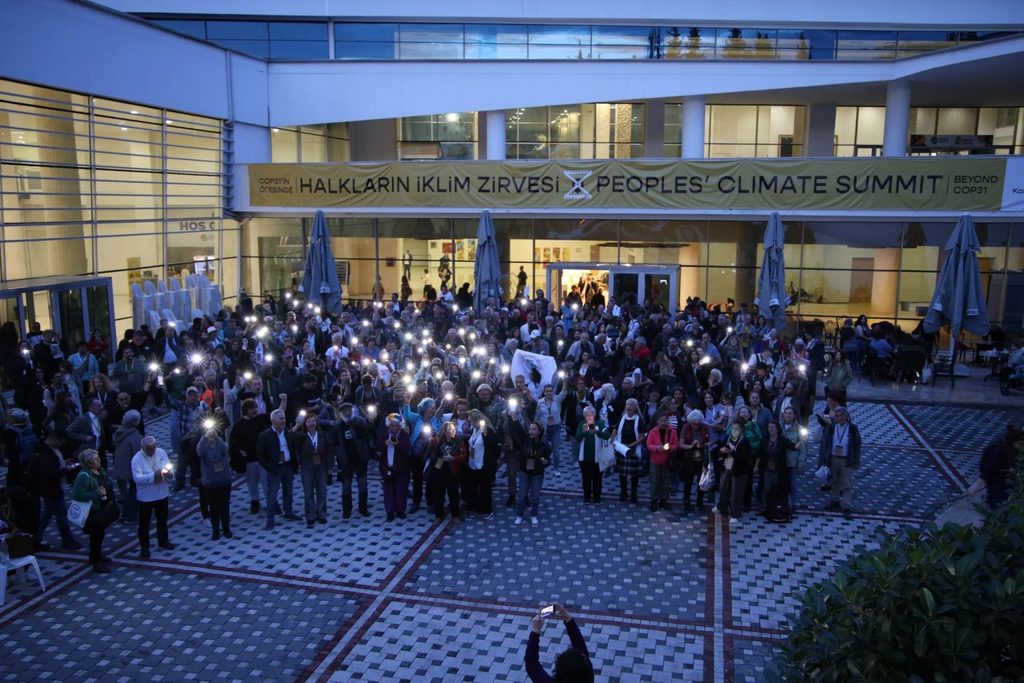
What remains with me from Antalya is that courtyard. The place where we listened to one another’s troubles, then held hands and danced together.
I dedicate these two lines from Goethe’s Prometheus to everyone who stood alongside us there:
“… to suffer, to weep,
to laugh, to rejoice.”
Hazal, November 2026