

Although Romania has the lowest job vacancy rate in Central and Eastern Europe, at 0.6%, young people in Romania continue to face an unemployment rate of approximately 15%, though data tends to show closer to 25%, which would mean that one in four young people is unemployed.
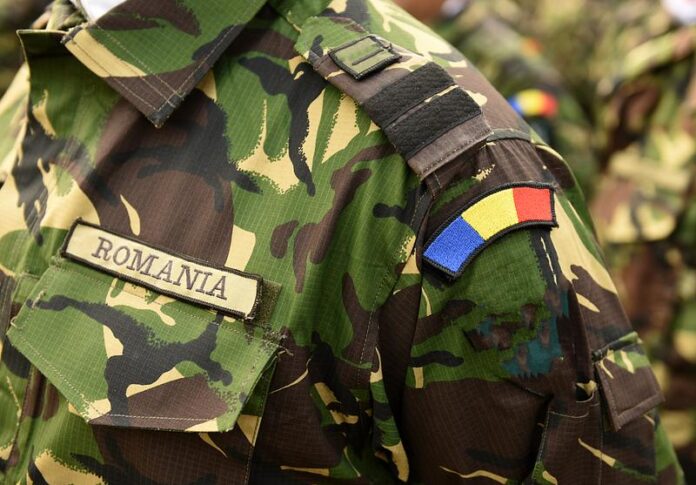
The government insists on promoting policies that ignore this real and deep-seated problem. We are witnessing a massive diversion of public resources toward armaments and the military sectors. In the second half of this year, Romania decided to invest billions of euros in military procurement, including a 2-billion-euro deal with the Israeli company Rafael for six SHORAD-VSHORAD systems, while the country’s young people are left without a secure future.
Furthermore, in various public appearances, Prime Minister Bolojan is urging people in other age groups to return to the workforce, such as those aged 50–65, of whom “only” about half are employed, according to the prime minister. This is an attempt to intensify competition in the labor market to preserve Romania’s so-called advantage in the global division of labor: a cheap, well-qualified workforce that is easily accessible to exploiters (whether foreign or domestic). At the same time, it may be a way to divert attention from the capitalist class, which is extracting ever-greater surplus value through inflation, and from the fact that Romania is a quasi-tax haven.
These military investments have direct effects on the working class. Through the taxes and levies imposed, workers’ money is transferred to the defense budget, forcing them to finance an arms market for which the state acts as both guarantor and client. In practice, workers indirectly support the building of a military apparatus designed to promote the interests of capitalists—euphemistically called entrepreneurs—and to suppress any form of protest or demand that would challenge the status quo.
By October 2025, we could already see how the government was using the pretext of the budget deficit to implement successive austerity packages that cut workers’ hard-won rights, from eliminating health insurance for family members to imposing additional taxes.
The Militarization and Demonization of Social Policies
Meanwhile, the authorities seem more concerned with reaffirming their servility and status as lackeys, unreservedly accepting requests for the use of Romanian military bases by the U.S., as was the case with the Mihail Kogălniceanu base for security projects serving U.S. interests in the Black Sea region and the Near East.
This stance reflects reality: a Romania that is, in fact, a market for arms as well as totally subordinated to the logic of global capitalism, which operates through conflicts and forced market reconfigurations.
More concerning is that, historically, this militarization has always translated into increased social control and the intensification of a police state designed to prevent any challenge to the status quo, thereby reducing the space for expression and action for workers and protesters. This, along with the mainstream media’s pandering to anti-communist and Legionary (fascist in the romanian historical inter-war tradition) figures and the demonization of social policies—not only by the mainstream media but also by political figures who claimed to be the so-called alternative to the far right (such as President Nicușor Dan)—on the one hand paints a bleak future for workers in Romania, yet at the same time leaves a huge void for the formation of an emancipatory force.
This force cannot emerge from a civil society with attitudes that promote an eternal, abstract peace (i.e., maintaining the capitalist system as it is), which ignores the reality of the constant violence under which the working masses live and the profit-extraction mechanisms that drive the necessity of war under capitalism. Most Romanians do not trust the government, nor politicians in general; even though not fully in a conscious manner, it is already clear to the working masses that their interests are antithetical to those of the bourgeoisie’s (government) administrators.
How are workers responding?
The aforementioned austerity policies have led to numerous protests—by teachers, steelworkers, and shipyard workers—but the strike proposed at the beginning of the summer by all the trade union federations did not take place, and there do not appear to be any steps being taken in that direction. The lack of creativity among union leaders keeps them stuck in the role of representatives of capital inside the labour force. The reasons cited for why this is happening are numerous, but unsatisfactory for workers.
This dissatisfaction is driving working people to look for electoral alternatives and is making opposition parties—which have never held power—increasingly popular; however, for now, there is no party that does not represent capital.
Local politicians, whether Macron-style figures like Nicușor Dan or those on the far right, most often align themselves with the pro-militarization agenda. What unites them most is their subservience to the Trump administration’s proposals, which manifests itself either very practically—through troop increases and higher GDP allocations for so-called defense—or culturally, through cringeworthy moments of silence in Parliament for various far-right activists from the U.S.
The state’s priorities reaffirm its nature as a tool of domination. Thus, in the absence of worker activism, capitalists advance their interests without hindrance, investing—in Romania’s case, rather acquiring—in weaponry and supporting a military market, while the rights of the average worker are eroded.
Austerity 2025: Cuts Directly Targeting Workers
The measures of the first austerity package have already begun to take effect, starting as early as October 2025. Here is a reminder of what they entail:
· substantial increases in the prices of all food items;
· thousands of hours of education lost (due to vacant teacher seats); core subjects such as Physics, Romanian Language and Literature, and Mathematics remaining without teachers—one reason being the hourly wage reduced to 22 lei, which has driven potential teachers either to other fields or to retirement for those eligible;
· rising electricity prices as a result of the elimination of the state subsidy for producers, known as “capping”;
· the destruction of libraries through their consolidation, particularly in the rural areas of the country, which are home to approximately 46% of the population—resulting in a decline in educational standards, given that over 40% of Romanians are considered functionally illiterate.
Along with this, it was announced that starting next year, young people would have the opportunity to enlist in military service for 3 months, initially being offered 2,200€ for the entire period. That is approximately 100 euros more than the national minimum wage. Later, the pay was increased to 5,400 euros, double the minimum wage. The reserve army of labour is no longer just a metaphor; it is in fact becoming a real military reserve army. Unemployed youth, day laborers, or seasonal workers—who used to be a resource exploited by capital to maintain control over labor costs—are becoming potential soldiers.
Conclusions
The government uses the deficit as a pretext to justify budget cuts when it comes to the hard-won gains of the Romanian working class, while simultaneously investing billions in military spending. Even though the “sovereignist” far right positions itself in its rhetoric against new investments, including against the European SAFE program, we can see how none of them opposed the increase in the budget allocation from 3.5% to 5% for defense and how, at every opportunity, they appeal to the authority of the U.S. president.
Furthermore, the Romanian working class remains without a means (a revolutionary party) to seize political power. The struggle against war is one of the methods that could facilitate the framework for creating this vehicle that can emancipate us workers.
But it must not limit itself to bourgeois pacifism, which seeks solutions in impotent international institutions or in the status quo that caused the escalation of conflicts. On the contrary, the peace movement must mature with the realization that the only solution to prevent a potential global conflict—in the wake of which the working masses would be devastated—is for them to seize political power.