

Article by Dustin Spence, re-published from the Solidarity Now substack
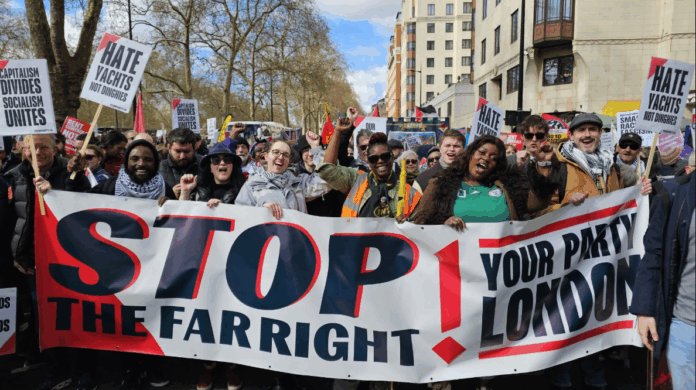
On Saturday (28 March) over 500,000 people from all across the UK gathered in London for what is being called the “the largest anti-far-Right march in British history.” Organized by the Together Alliance, last weekend’s event culminated in an extensive rally of speakers and musicians in Trafalgar Square, where a marquee proclaimed the stage to be the “House Against Hate.” The march snaked its way through Central London, with many of us having to wait multiple hours at the starting point due to the sheer size of the march and the planned convergence of two simultaneous marches along the route. The event was marked by its eclecticism and a wide representation of those opposed to the forces of the Far-Right in the UK and beyond. Much of the protest directed its opposition across the pond, with signs lambasting US President Donald Trump and his murderous and unprovoked war on Iran. Given the wide range of opinion represented at the event, it can be asked what political lessons can be drawn from this massive demonstration?
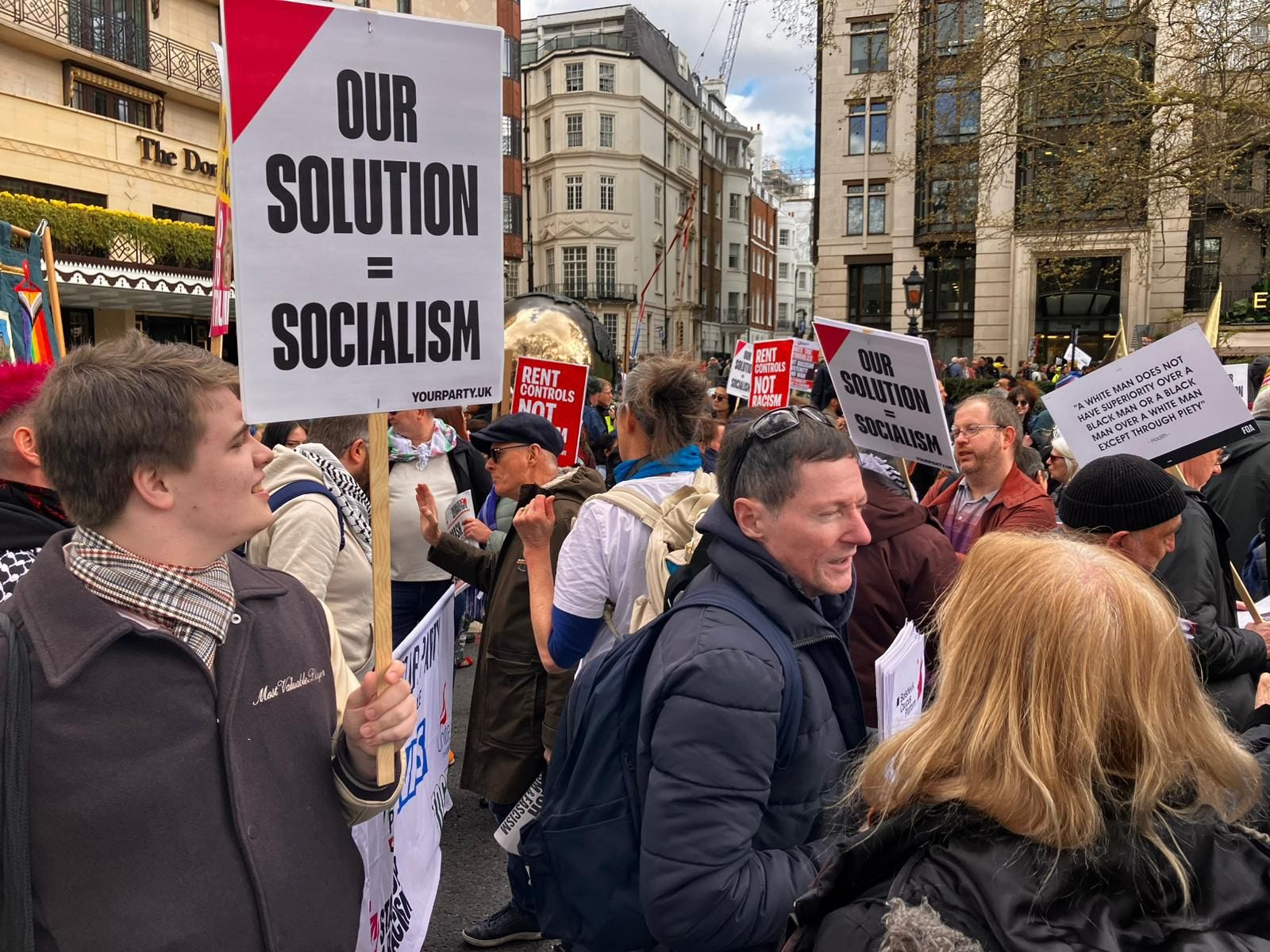
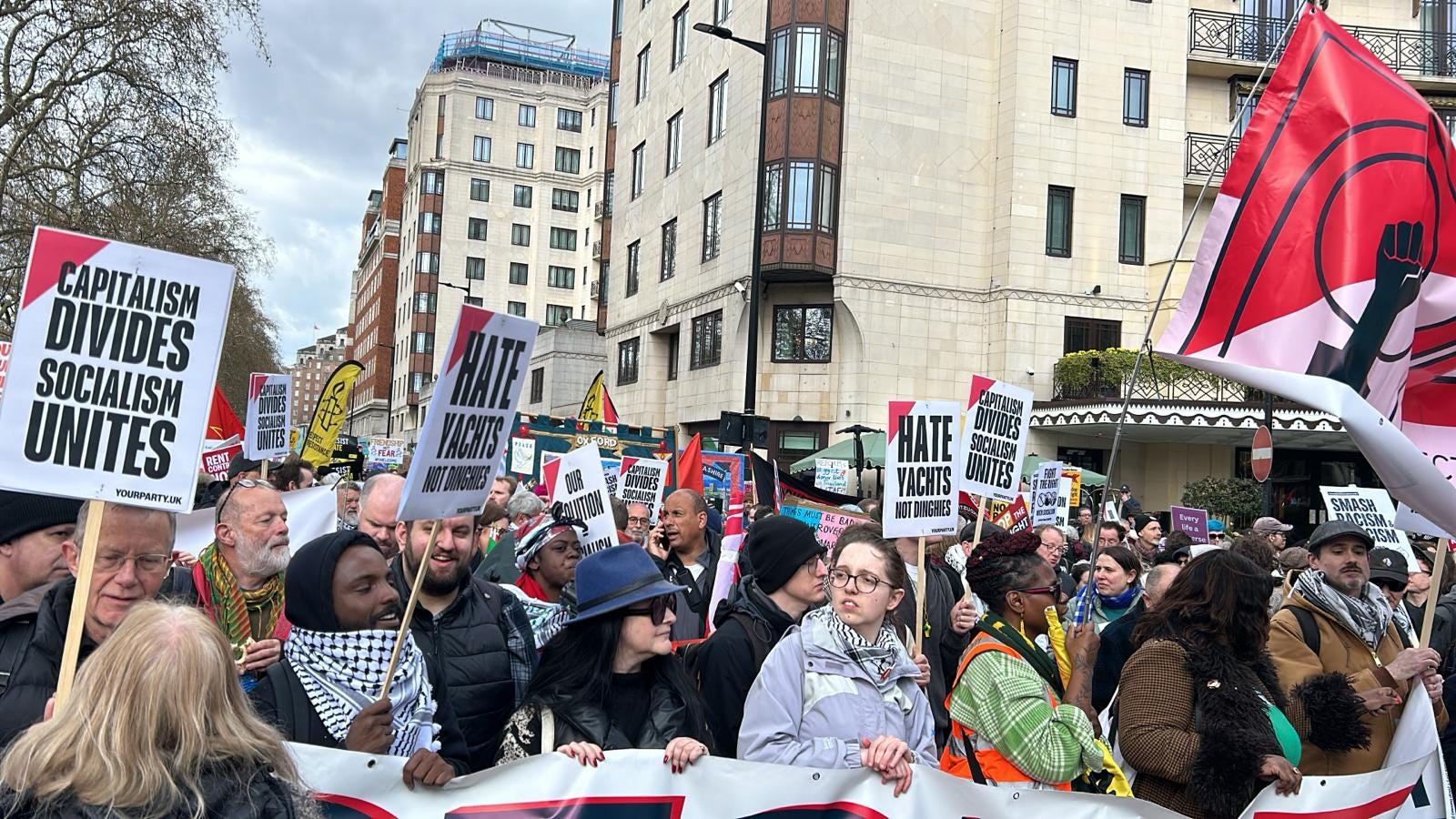
I joined the march as a part of the Your Party (YP) bloc, which was organized by the rank-and-file built All-London Delegates Assembly (ALDA) and brought out about 500 members representing 58 proto-branches. This was a significant accomplishment, built from the ground up by elected local branch delegates attending regular ALDA meetings. The clarity of direction and program from ALDA meetings was then carried into action through the judicious use of WhatsApp chats open to YP members. These group chats were built despite YP leadership’s unwillingness to share basic member information with the proto-branches in their efforts to bureaucratically stifle member-to-member communication.
The biggest political question that came out of the bloc was: what is the difference between YP and the Green Party? The Greens have been making big headlines with multiple by-election wins in the last few months and opinion polls showing them surpassing the 125 year old Labour Party on a national level. If both Greens and YP are parties “to the left of Labour” is there anything really separating them at this point? Is it merely organizational pride or sectarianism that stands in the way of a broader Left unity? This point was particularly salient in the popular front atmosphere of the Together Alliance march. However, there is more than history that separates the Greens from YP.
The most important distinction is the location of the energy within each party. The Green Party, undoubtedly, has significant energy consolidated within its central leadership. Its charismatic new leader Zack Polanski has utilized his position to mobilize party members and drawn in thousands of new members to the party, aided by extensive coverage in liberal and online media. Notably, the successful Gordon and Denton by-election campaign of Hannah Spencer showed how a left-wing party can move its forces to the point of attack and win. In this case the Greens successfully defeated the incumbent Labour Party and prevented what was previously considered the all-but-certain election of another Far-Right Reform Party member to Parliament.
But what about activity that is not specifically coordinated by the center? The Greens, despite their significant size and resources, have not shown themselves to be particularly visible street campaigners. At the Together Alliance march the Greens did not use their position as the only named political party bloc to any clear political ends. In this way the Greens stand as a mirror image to the grass roots, working class character of YP.
The ALDA-organized YP bloc at the Together Alliance march was not even recognized by any of the party’s officially recognized structures. ALDA itself was born out of the desires of supporters of the Grassroots Left leadership slate for a more democratic and member-run party, and was developed by the proto-branches themselves, completely independent (and often in opposition to) the YP central leadership. ALDA was created by the proto-branches across the Greater London area who recognized a need for coordinated efforts and who refused to wait around while the majority of YP’s Central Executive Committee (CEC) dithered and delayed. The YP bloc at the march was a reflection that the membership of the party is active and ready to fight, not just to jump whenever Jeremy Corbyn says so, or to ask “how high?” when Zarah Sultana makes a post on X.
The self-organized character of the YP bloc shows the real fighting potential that the party has, and the committed working-class activist base of the party. There was a recognition that YP members needed to participate in this march, and to do so as a politicized and coordinated action, not simply as individual members. The bloc has also shown rank-and-file members of YP that reports of the party’s death have been greatly exaggerated, emanating as they do from the same establishment media which has spent most of the last century insisting that socialism is finished.
It is worth considering that the Together Alliance march was styled after, and seemingly coordinated with, the No Kings Day march in the US on the same day. The tone of the march certainly had a feel that was familiar to me, having participated in Women’s Marches and Indivisible Rallies in the US over the last decade. This means that there was definitely an effort to stifle voices deemed too far to the Left; the organizers’ refusal to officially include nearly all political organizations in the lead-up to the march left NGOs and centrist voices occupying most of the political space. This attempt to “aim at the middle” and against the Right was made all the more tragic given that it comes straight out of the thoroughly discredited Labour Party playbook, which readers in the US will be all too familiar with from the machinations of the corporate Democrats.
In contrast to all of this, the YP bloc was able to stand out in the midst of the march precisely because it was a rallying point for a clear socialist political point of view, one that was given a voice and a direction as a part of the march. ALDA organizers printed picket signs reading “Hate Yachts Not Dinghies”, “Our Solution = Socialism”, and “Capitalism Divides – Socialism Unites”. This was intentionally aimed at meeting the tone of unity set by the march organizers, while also linking it to the reality that achieving such unity is impossible under capitalism. In this way, YP pointed the way forward in a way that was done by no other contingent.
There remains a debate on what the next steps will be for YP and it remains unclear the exact orientation of the party towards the May local elections. However, members have gained confidence from participating in a coordinated way in the Together Alliance march, and it is this confidence that will be needed to bolster the membership’s fighting approach towards the struggles ahead.