

Internationalist Standpoint is publishing an article by Dustin Spence, a socialist that has moved from Chicago to London. This article was first published by “Solidarity Now”, a working class organisation which campaigns using a united front approach, connecting both unaligned activists and members of existing organisations.
I have lived in the UK for just over five months. I signed up for membership in Your Party (YP) as soon as the dues portal was opened. I am a seasoned activist with over ten years of movement building experience. And yet, even for me, the experience of YP has been an exhausting one. There has not been a single moment in the brief history of YP that has been stable or united. As much as the press would like to paint YP as the failed leftist project of Jeremy Corbyn, proclaimed dead on arrival since the moment it was launched less than a year ago, it is crucial to take a real measure of the state of YP in this moment during the election of the party’s Central Executive Committee (CEC).
Following the inaugural Conference of YP in Liverpool in November there were real questions around whether the working class in Britain should expect new unity and political direction. After all, the Conference was marked by an open struggle between two factions within YP leadership. One faction backed Jeremy Corbyn and undoubtedly had control of the official apparatus of YP. The other faction supported Zarah Sultana and had won the support of the vast majority of the membership. This majority demanded an open, inclusive, unapologetically left radical socialist party.
It was this majority which won all of the major votes at the founding Conference, most significantly winning a collective leadership proposal (as opposed to a structure with a single party leader, as the existing, capitalist parties do) and winning a proposal which allowed for YP members to hold dual membership. Dual membership would allow activists who belong to existing socialist groups, in many cases because they were expelled from the Labour Party for advocating socialist politics, to maintain their membership in those organizations. Losing this vote would have meant losing the collective experience and wisdom of hundreds of seasoned activists.
Yet for all of the excitement of these wins there was a clear understanding that although this was a victorious battle, it would not be the end of the war for the soul of YP. The Corbyn faction remained in control of the party apparatus, and did not cede any ground on the basis of member democracy or the collective decisions made at Conference. On the contrary it acted as though they had never happened, using their control of the apparatus to ban numerous well known activists from standing in the elections for the CEC.
CEC votes are currently being cast by the membership and voting will run through 23 February. All of this is happening amid the colossal fallout of the Labour government’s connection to the Epstein files, and Keir Starmer’s premiership seeming on the verge of collapse. The British working class is increasingly looking for an alternative to a status quo that has seen living standards falling for the past 18 years. Uniquely amongst the major European powers, living standards here have never recovered from the 2008 recession. According to one of many recent studies real wages, which grew by 33% per decade from 1970–2007, fell below zero in the 2010s, resulting in the longest, deepest, and most sustained period of low income growth in generations. If pre-2008 trends had continued, the typical working-age family income would today be over £50,000, instead of the current level of around £31,000. The UK has the highest levels of inequality of any large European economy, with poor households £4,300 a year worse off than their German or French counterparts. This is the material basis for so many Britons giving up on the establishment parties, and for the phenomena of traffic roundabouts being painted with the flag of the Cross of St. George (England’s patron saint), as though this would magically restore the UK’s economy. That particular study was from 2023; more recent figures show that the decline has continued under Starmer’s rotten New Labour-style administration. Labour has also reinforced the long tradition of UK governments behaving, in Russian Revolutionary Leon Trotsky’s memorable phrase, as the errand boys of US imperialism. This has come increasingly to the fore as the Trump administration has kidnapped the president of Venezuela, threatened to invade Greenland (a territory controlled by a NATO ally), and allowed ICE agents to kidnap and kill American citizens and migrants with impunity. Workers in the UK are horrified, and correctly see that neither of the two “major parties” (Labour or the Conservatives) have an answer. This has given rise to support for YP and the Greens on the Left, and Reform on the Right.
With thousands of elected positions up for grabs in local elections in May and a parliamentary by-election at the end of February, the position of YP within the wider electoral milieu is important and has been written about widely. Many on the Left have settled into the position that YP should critically support the Greens and serious Left Independents in local and national elections in 2026. I believe this position is correct given the state of YP as a developing working-class party with an explicitly socialist program. The electoral calculus of who YP should support and whether to run its own candidates is important. This is particularly true when considering the need to stop Nigel Farage’s racist xenophobic right-wing Reform party from coming to power. However, electoralism is not the most important question for YP.
The critical lesson from the Labour Party’s Corbyn years is that any attempt at seriously reforming the capitalist system will be seen as a declaration of war by the ruling class. This is a lesson that the Left in the UK are still grappling with. Standing serious YP candidates in any election within the UK will require a base of support and serious roots within labour and social movements. This is necessary because there will be no institutional support given by any corner of the political or media establishment. Those in power will fight back and they will not fight fair. The massive impact of the BBC and corporate media in the intra-party conflicts within Labour which ousted Corbyn as party leader in 2020 should have made this point clear. If YP is to chart a different path from Labour and the Greens then these lessons need to be taken to heart.
What does all of this mean for the current state of YP? The contentious nature of the ongoing CEC elections are a feature and not a bug in the development of a left-wing socialist party that actually means what it says. Some have bemoaned the ongoing intra-party conflict saying that if there was simply more “unity” within the party then YP would have been able to run candidates in the February and May elections. But time and again those making the loudest calls for “unity” are the very ones backing a rule-or-ruin approach to the direction of YP. Corbyn’s The Many (TM) leadership election slate is backed by the very same YP staffers who unilaterally declared that YP dual-members were ineligible to stand in CEC elections in spite of the clear vote of Conference allowing dual membership. The TM slate has launched a smear campaign against Zarah Sultana’s rival Grassroots Left (GL) slate claiming that only TM can guarantee “unity” and an end to “divisiveness” within YP. This is a particularly ironic claim given that GL has called for a vote for Corbyn for the CEC along with Sultana and others, while TM, shockingly has not included Sultana – arguably Your Party’s actual founder – or anyone outside of Corbyn’s inner circle in its leadership endorsements. The GL slate has clearly captured the support of the most energetic parts of the party membership while TM supporters have focused on party bureaucracy and proceduralisms.
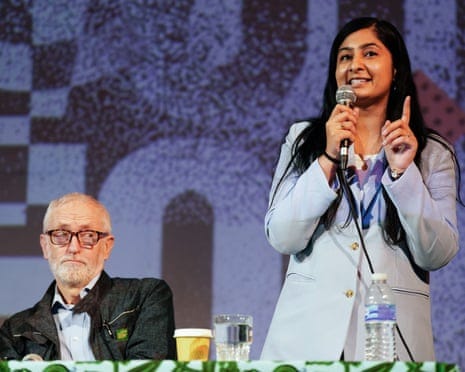
These two slates, and the pending results of the leadership contest, do not paint a picture of one unified idea of what YP should be. Certainly not one that could have been immediately prepared to stand in spring elections on a principled basis. In this light it has been particularly painful to hear the sectarian proclamations of left groups who are involved in or on the periphery of YP – mimicking the establishment’s funerary preparation for the project. YP has the opportunity to clarify its program, and present a case of why working class people should look to it as their party. Indeed, postponing this necessary political clarification and charging headlong into poorly prepared electoral campaigns would have actually spelled the beginning of the end for the YP project as a whole.
We must consider once again the pronouncements from the establishment press that the conflicts within YP are the death knells of a stillborn party. Is YP DOA? Of course not! While involvement in YP in the North of England, which had been especially vigorous in the party’s early days, appears to have plateaued, the membership in the South (particularly in London), as well as Scotland and Wales, are just now coming into their own. So-called proto-branches have sprung up across the UK with members demanding access to the central membership rolls and funding for local branch initiatives. YP contingents, largely organized by those associated with the GL leadership slate, have become an increasingly visible feature at protest marches and picket lines – most notably marching at the front of the national march for Palestine in January.
If the party is not DOA, then what is to be made of the internal turmoil within YP? The struggle for political clarity within a working class organization should be a sign, as I believe it is in the case of YP, of a healthy and politically conscious membership. The fact that rank-and-file members have not allowed YP to become a campaigning apparatus for Jeremy Corbyn or Zarah Sultana is a testament to the commitment to struggle of those involved. There is a reckoning taking place across the Left in Britain and around the world that following old formulations by rote simply won’t cut it. The working class does not need a Labour Party 2.0, nor does it need a newly fashioned version of the Communist Party of Great Britain, which never won mass support and only ever returned two of its members to Parliament.
YP’s multitendency, grassroots nature guaranteed that multiple ideas would be brought to the fore, and that those ideas would have to struggle with one another and with the wider political reality to find a way forward. To this end it is of critical importance that YP members have strongly opposed bureaucratic expulsions from the party, even if it meant having to debate additional ideas in the public forum. In this and many other ways there is a similarity between YP in the UK and the Left and grassroots regroupments presently developing in the US, of which Solidarity Now is one example. Increasingly, working class people around the globe are recognizing that old assumptions and sectarianisms need to be set aside if we are to truly win the world for the working class. New structures and organizations will need to be built. Discussion and debate will be needed to separate the useful lessons and traditions of past organizing and political efforts, with the best of those ideas carried forward into the present. This is the process taking place within YP. Rather than a warning sign of what to be avoided, the internal struggle of the YP membership should be seen for what it is: an example to be learned from and a battlecry for the class war that lies ahead.
Solidarity!